


Capturing Authenticity in Chicago's Cold Nights Through Amateur Street Photography - Today's Pictures
- Dec 12, 2025
- 5 min read
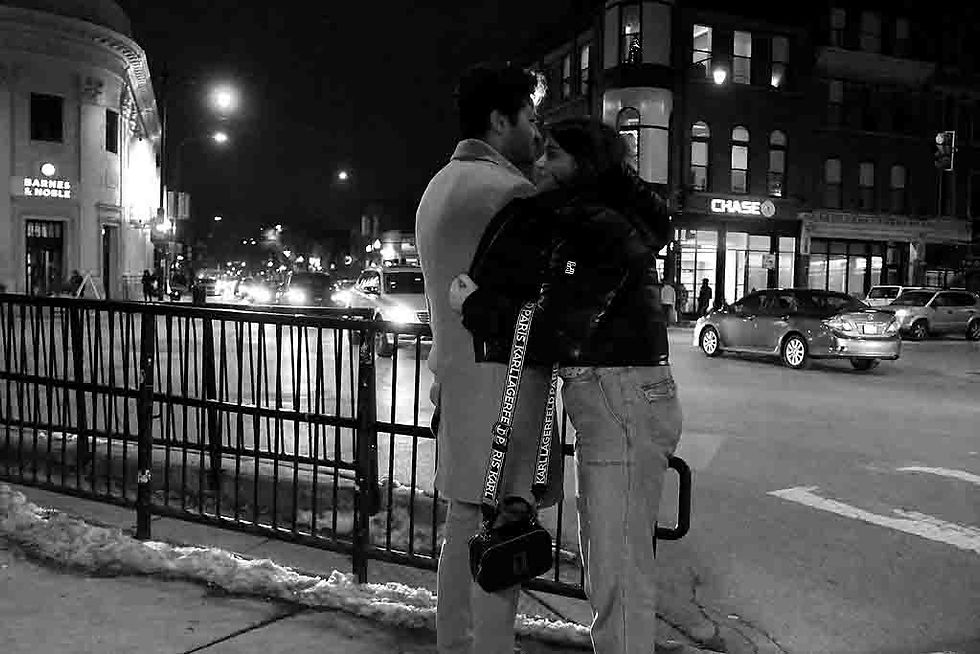
Chicago’s streets on a cold, overcast Friday evening tell stories that no staged photo can match. The weekend buzz fills the air despite the chill, and the neighborhood comes alive with people moving through their routines and moments. This is the perfect setting for street photography that captures life as it unfolds naturally, without scripts or poses.
Why Amateur Photography Holds a Unique Power
There is a clear difference between amateur and professional photographers, not just in skill or experience, but in freedom. A professional often works under direction, following guidelines set by others. An amateur, by contrast, works for themselves. This distinction matters deeply when it comes to art like street photography.
Following someone else’s instructions on how to take photos can limit creativity. It can turn a personal vision into a forced imitation. The best images come from trusting your own instincts, seeing the world through your own eyes, and capturing what moves you. This is why many photographers, including Elliott Erwitt, say their amateur work often feels more genuine and better than their professional assignments.


The Challenge and Reward of Shooting on Cold, Overcast Evenings
Shooting on a cold, overcast Friday evening in Chicago presents challenges that test a photographer’s patience and vision. The gray skies mute colors, the cold can numb fingers, and the streets can feel less inviting. Yet, these conditions also create a unique atmosphere that adds depth to the images.
The subdued light softens shadows and highlights, making the scene feel more intimate. People bundled in coats, steam rising from street food vendors, and the glow of street lamps create a mood that tells a story of resilience and everyday life. The cold does not stop the city; it changes its rhythm, and capturing that rhythm requires being present and open to what unfolds naturally.

The Streets Full of Life on a Weekend Evening
Despite the cold, the weekend draws people out. The streets fill with neighbors, friends, and strangers, each with their own story. This crowd is not a backdrop but the heart of street photography. The goal is to capture moments that reveal something true about the people and the place.
Authentic street photography avoids staging or posing. It’s about catching a glance, a gesture, or a fleeting interaction. These moments are unpredictable and cannot be recreated on command. The photographer’s role is to observe quietly and be ready to capture the scene as it happens.


Staying True to Your Vision as an Amateur Photographer
Choosing to remain an amateur photographer means embracing the freedom to follow your own mind. It means rejecting the pressure to conform to others’ ideas of what photography should be. This freedom often leads to more honest and compelling images.
The risk of following directions in art is that it can lead to disaster, as one photographer’s experience shows. When someone else tries to control how you see and capture the world, the result can feel forced and lifeless. Authenticity comes from trusting your own perspective, even if it means breaking rules or ignoring trends.

The Value of Unstaged, Unposed Street Photography
Street photography that is not staged or posed holds a special value. It captures life in its raw form, with all its imperfections and surprises. These photos tell stories that are real and relatable.
In Chicago’s neighborhoods on a cold Friday evening, this means showing people as they are—walking, talking, waiting, or simply being. The images become a record of the city’s character and the human spirit within it.


Embracing the Role of an Amateur to Create Better Art
The idea that amateur pictures can be better than professional ones is not just a romantic notion. It reflects the reality that art thrives on personal expression and freedom. When photographers work for themselves, they can explore ideas and moments that matter most to them.
This approach encourages experimentation and honesty. It allows photographers to capture the unexpected and the overlooked. In the end, this leads to images that resonate more deeply with viewers.

What Makes Feng Liu’s Work Stand Out
• Deep Commitment & Immense Archive
Feng Liu moved from Shanghai to Chicago in 1999, and since then has documented the city’s streets nearly every day.
Over decades he built a vast, intimate archive — hundreds of thousands (if not millions) of photographs — making his work not just individual images, but a living chronicle of Chicago’s evolving urban life.
That long-term dedication gives his photography weight: critics see it as more than aesthetic exploration — it becomes a visual history of a major American metropolis.
• Authentic, Unstaged, Human — Emotional & Honest
He refuses to stage scenes or heavily manipulate images — he photographs life as it unfolds.
His frames often capture fleeting, candid moments: gestures, expressions, glances — things most of us overlook.
That authenticity gives his work a human dignity — people are not props, but real individuals with real stories. Critics value that empathy and respect.
• A Strong “Decisive Moment” Eye with Poetic Composition
His photography echoes the tradition of classic street masters (think Henri Cartier-Bresson, Robert Doisneau), capturing the “decisive moment” — that precise instant when gesture, emotion, and environment align.
But Liu adds a modern sensibility: light and shadow, geometry of streets, human presence — all composed in a way that feels cinematic, poetic.
Especially in his night / low-light or black-and-white images: the contrast of streetlamps, reflections, silhouettes — a dramatic mood that draws viewers in emotionally.
• Chicago as Character + Cross-Cultural Perspective
For Feng Liu, Chicago isn’t just a backdrop — it’s a living character in his work. He documents neighborhoods, everyday people, cultural diversity, urban rhythms.
As someone who came from Shanghai, he views Chicago both as an “insider” (having lived there decades) and as an “outsider” — which gives him a fresh, curious perspective. That viewpoint helps him see and record details others might take for granted.
Critics appreciate this cross-cultural, dual-vision approach — making his work resonate not only with local audiences, but internationally as a universal portrait of urban life.
• Archive + Legacy — Art and History
Over years, his body of work becomes more than art: it’s a historical archive of Chicago’s social, cultural and urban changes: people, places, moods, shifts over time.
Because of that, critics and curators see his photography as valuable for future generations — not just aesthetically, but sociologically.
Also, by working independently (publishing on his own platform rather than relying solely on galleries), he models a new kind of sustainable, long-term photographic practice for the digital age.
What Critics Actually Say — in Their Words / Implication
His photos “turn city streets into open-ended stories — a theater of real human moments.”
He “captures the texture of daily life” in Chicago over time.
His work is hailed as merging “documentary realism with poetic resonance” — honest yet deeply expressive.
By maintaining his vision and discipline for decades, he’s regarded as part of a lineage of great street photographers — but with a distinctive, modern, cross-cultural voice.


In Short: Why Critics Give High Praise to Feng Liu
Because his photography isn’t just about striking photos. It’s
Authentic — real life, unstaged, human.
Disciplined & deep — decades of constant work building a massive archive.
Emotionally and visually powerful — light, shadow, gesture, mood, composition.
Culturally & socially meaningful — Chicago as microcosm of America; cross-cultural insights.
Legacy-oriented — photos as both art and historical document.
That combination — rare dedication + artistry + humanity + social relevance — is what leads critics to view Feng Liu’s Chicago night/street photography as among the most important contemporary street-photography work today


Comments