


Capturing Fleeting Moments: Embracing the Art of Chicago Night Street Photography - Today's Pictures
Night falls over Chicago, and the city transforms into a canvas of light and shadow. The streets pulse with life, stories unfold in passing glances, and moments slip away as quickly as they arrive. Capturing these fleeting instances requires more than just a camera; it demands an eye tuned to the rhythm of the city and a heart open to its stories. This is the essence of Chicago night street photography—a pursuit that reveals the truth in everyday life and celebrates the unexpected beauty found in the urban night.

The Power of Truth in Night Photography
Robert Capa once said, "The truth is the best picture, the best propaganda." This idea resonates deeply with night street photography. The best images are not staged or manipulated; they are honest reflections of a moment in time. Chicago’s neighborhoods at night offer countless opportunities to witness genuine human interactions, quiet solitude, or bursts of energy. The challenge lies in recognizing these moments before they vanish.
Night photography strips away distractions. The darkness simplifies the scene, focusing attention on light, shadow, and movement. Neon signs flicker, street lamps cast pools of light, and reflections shimmer on wet pavement. These elements create a mood that can reveal the city’s character more vividly than daylight ever could.

Finding Art in the Rules and Breaking Them
Claude Debussy’s words, "Works of art make rules; rules do not make works of art," remind us that creativity thrives when we move beyond conventions. Night street photography in Chicago is not about following strict guidelines or technical formulas. It’s about embracing spontaneity and intuition.
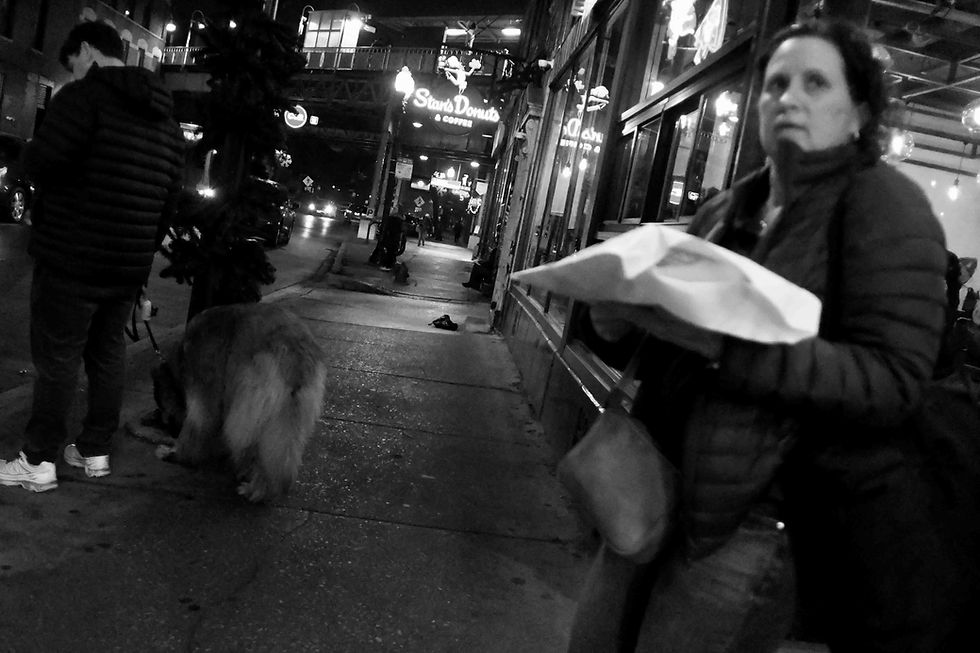
The city’s nightscape invites experimentation. Sometimes a blurred figure crossing the street tells a more compelling story than a perfectly sharp portrait. Sometimes the grain of a high ISO adds texture that enhances the mood. The goal is not to produce flawless images but to capture the essence of a moment.
This freedom encourages photographers to explore their own vision. Each neighborhood in Chicago has its own personality—from the vibrant murals of Pilsen to the quiet corners of Hyde Park. By immersing oneself in these environments, the photographer becomes part of the scene, able to anticipate and capture moments that others might miss.

The Music of the Night Streets
Debussy also said, "I love music passionately. And because I love it I try to free it from barren traditions that stifle it." Night street photography shares this passion for breaking free. The city’s night rhythm is like music—sometimes slow and contemplative, sometimes fast and chaotic.
Photographers who embrace this rhythm find themselves moving with the flow of the streets. They listen to the sounds around them—the distant hum of traffic, the laughter spilling from a late-night café, the footsteps echoing on empty sidewalks. These sounds shape the way they see and capture the scene.
By tuning into this urban music, photographers can create images that feel alive and authentic. The interplay of light and shadow becomes a visual melody, and the fleeting moments become notes in a larger composition.

Embracing the Neighborhoods’ Unique Stories
Chicago’s neighborhoods each tell their own stories after dark. Capturing these stories requires more than just pointing a camera—it requires connection and respect.
In neighborhoods like Chinatown, the glow of red lanterns and the bustle of late-night markets create a distinct atmosphere. In Wicker Park, street art and nightlife blend into a colorful backdrop. On the South Side, quiet streets hold memories and histories that surface in subtle ways.
Spending time in these areas allows photographers to understand their rhythms and nuances. The best images come from moments when the photographer is not an outsider but a participant, observing with empathy and curiosity.

The Beauty of Fleeting Moments
Night street photography is about capturing what cannot be held. A glance, a gesture, a shadow crossing a wall—these moments are transient, yet they carry meaning. The photographer’s role is to recognize and preserve them.
This pursuit requires patience and presence. It means waiting for the right light, watching for the right expression, and being ready to press the shutter at the perfect instant. It also means accepting that many moments will pass unnoticed, and that is part of the art.
The fleeting nature of these moments makes them precious. Each photograph becomes a small victory against time, a way to hold onto the city’s ever-changing spirit.
The Photographer’s Relationship with the City
Chicago at night is both a subject and a partner in this creative process. The city’s energy influences the photographer’s mood and choices. In turn, the photographer’s vision shapes how the city is seen by others.
This relationship is dynamic. It evolves with every walk through the streets, every encounter, every frame captured. It is a dialogue between light and shadow, between silence and sound, between the known and the unknown.
By embracing this relationship, photographers create work that goes beyond documentation. They create art that speaks to the heart of the city and its people.

Feng Liu’s Chicago night street photography — like what you see on fengliuchicago.com — has a reputation for being especially striking because it brings together artistry, mood, and technical skill in ways that resonate with many viewers around the world. Here’s what makes it stand out and why people (including photographers and critics) often describe it as amazing:

1. Cinematic Use of Light & Shadow
Liu doesn’t just take photos — he sculpts with light.
At night, Chicago’s artificial lights (streetlamps, neon signs, headlights) create pools of brightness and deep shadows. Feng Liu uses these contrasts to add atmosphere, drama, and depth that feels almost like a movie still rather than a snapshot — something many traditional street photographers don’t explore as much. �
2. Transforming Chicago’s Nightscape
Rather than focusing on well-lit daytime scenes or iconic landmarks, Liu embraces nighttime moods, reflections on wet pavement, and the mystery of alleyways and quiet streets. This approach reimagines Chicago — making familiar places feel fresh, moody, and poetic. �
feng-liu-chicago
3. Cross-Cultural Visual Sensibility
Feng Liu blends East Asian night aesthetics (rich neon color, glowing cityscapes) with Western street-photography spontaneity. This fusion results in visuals that feel both global and unique, appealing to viewers from many cultures. �
4. Dynamic Energy & Motion
His photos often capture motion — light trails, blurred figures, bustling urban rhythms — which gives a sense of movement and life even at night. That energy contrasts with more static street photography, making his images feel alive.
5. Narrative & Emotional Depth
More than just pretty pictures, Liu’s night images often tell stories: a solitary pedestrian under a lamp, a group chatting outside a late-night diner, reflections shimmering after rain. They convey emotion — solitude, romance, mystery — that draws viewers in. �
6. Technical Mastery in Challenging Conditions
Night street photography is difficult — low light, fast movements, and noise can easily ruin shots. Liu consistently controls exposure, focus, and composition so his images remain clean, expressive, and well-balanced. That level of skill contributes to why people admire his work. �
7. Authenticity & Human Presence
Despite the atmosphere and technical finesse, his photographs often capture unstaged, human moments — gestures, glances, ordinary life at night — which give them honesty and connectivity. �
8. Widely Shared & Influential
Liu’s work circulates across social media and photography communities — spreading his style and inspiring others. That visibility has helped people around the world appreciate his vision. �
In short: Feng Liu’s Chicago night street photography feels amazing because it merges cinematic lighting, emotional depth, technical excellence, and a fresh way of seeing a familiar city — turning streets after dark into stories rather than just pictures.


Comments