


Capturing Fleeting Moments in Chicago Street Photography Without Staging or Photoshop or AI - Today's Pictures
Street photography is about spontaneity and authenticity. It captures life as it unfolds, often in surprising ways. In Chicago, especially on a cloudy Saturday, the vibrancy of downtown offers a unique canvas for photographers. The charm of this art form is in its ability to tell stories through fleeting moments, where every click of the shutter reveals a narrative waiting to be explored.

The Essence of Street Photography
Street photography is not merely a task of snapping pictures; it involves capturing the very soul of a city. Chicago, with its rich history and vibrant culture, presents countless scenes reflecting the daily lives of its people. According to a 2020 report by the Chicago Urban League, over 2.7 million residents from diverse backgrounds contribute to the rich tapestry of city life. These bustling streets are alive with movement, emotion, and stories that can’t be repeated. Each photograph becomes a window into a moment that is fleeting, which makes capturing these images important.
The Importance of Authenticity
Authenticity holds great value in street photography. The guiding principle of "no stage, no Photoshop, no AI" resonates with many photographers who wish to portray life truthfully. A picture's beauty often lies in its rawness, offering a narrative that is unfiltered. For instance, a photograph of a street vendor serving hot dogs to a group of children conveys a genuine slice of life in Chicago, showcasing the city's culture without alteration.
Cloudy Saturdays: A Unique Atmosphere
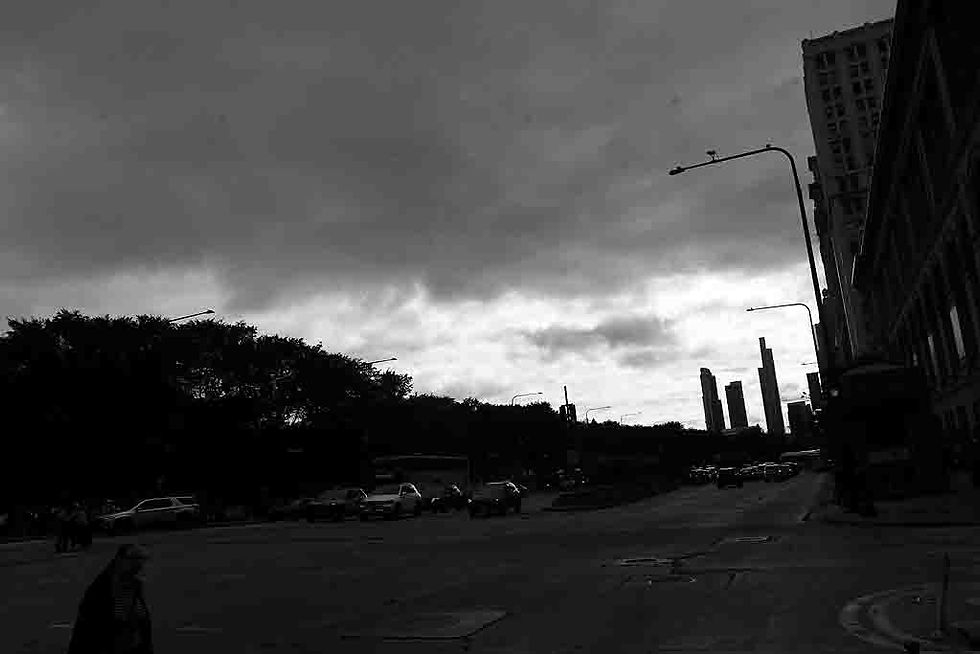
A cloudy Saturday in Chicago sets a moody stage for street photography. The soft, diffused light reduces harsh contrasts that strong sunlight can create, leading to more even exposure. This type of lighting often brings out subtler emotions in photographs. For example, a scene featuring a couple sharing an umbrella in the rain becomes more intimate under this soft light, allowing the viewer to feel the connection
between the subjects.
Capturing Fleeting Moments
The transient nature of street life is captivating. People move swiftly, each absorbed in their own world, making it the photographer's task to freeze these moments. Whether it’s a child’s laughter, a couple’s shared glance, or a street performer captivating a small crowd, each moment tells its own story. In fact, a recent study showed that emotional expressions can enhance the impact of photography, making captured moments resonate even stronger with viewers.
The Click: A Finality
Once the shutter clicks, the moment is preserved forever. This finality can be both freeing and intimidating. There’s no chance for adjustments or enhancements. What you see is what you get, reinforcing the idea that every photograph represents a unique slice of time. For example, capturing a busy crosswalk just as the signal changes is a moment that could never be recreated precisely, highlighting the urgency of urban life.
The Stories Behind the Lens
Every photograph tells a story, and it’s the photographer's job to share that narrative. Stories can be as varied as the subjects. A solitary figure waiting at a bus stop might evoke feelings of loneliness, while a vibrant concert scene in Grant Park can reflect the energy of community and joy. Understanding these emotions can deepen the engagement that viewers have with the image.
The Role of Composition
While spontaneity is the heart of street photography, composition is crucial. The arrangement of elements in the frame can significantly alter the story being told. Effective techniques such as leading lines and the rule of thirds help enhance the visual appeal. For instance, positioning a subject off-center can create a dynamic image that draws viewers’ eyes into the frame, making them part of the story.

The Challenge of Street Photography
Street photography comes with its challenges. Capturing candid moments takes patience and sharp observational skills. Photographers must navigate their surroundings seamlessly, allowing life to flow naturally. A photographer quietly capturing a child's expressive face in a park might need to stand unnoticed to avoid altering the scene, thus maintaining authenticity.
The Joy of Discovery
One of the most fulfilling aspects of street photography is the joy of discovery. Each outing can lead to new and unexpected encounters. For instance, stumbling upon an artist painting a mural can become an exciting opportunity to document a creative process. Chicago’s streets are rich with characters and interactions, making every corner worth exploring.

The Community of Street Photographers
Engaging with fellow street photographers can provide inspiration and support. Sharing experiences, tips, and stories can cultivate a sense of community among those who appreciate this art form. Participation in online forums and local meetups can offer valuable resources for skill development. For example, joining a local photography group can lead to partnerships for photo walks, cultivating both technique and camaraderie.
The Art of Capturing Life
Street photography in Chicago, particularly on a cloudy Saturday, unfolds a vibrant tapestry of life. The essence of this art form lies in its authenticity and the tales woven in each moment. By holding fast to principles like no staging or manipulation, photographers can birth images grounded in truth and emotion.
Capturing fleeting moments is much more than just taking pictures; it’s embracing the beauty of life as it unfolds. Each shutter click is a testament to the ongoing stories in our everyday surroundings, reinforcing that there’s always something valuable waiting to be photographed.
As you step into the streets, remember to keep an open mind and your camera ready. The world around you is rich with stories that long to be told, and sometimes all it takes is a single moment to capture them.

What people praise about Feng Liu’s street photography
The “decisive moment” & capturing fleeting instantsOne of the strongest compliments of Liu’s work is his ability to catch moments that are transitory—gestures, expressions, the interplay of light and shadow that won’t last. Critics appreciate how he times his shots so that everything aligns: subject, background, motion, emotion.
Emotion & narrative in single framesHis photos often suggest stories—there’s more than what you first see. They evoke mood, tension, humor, solitude, community, etc. Viewers feel there’s depth to what Liu captures, beyond just what’s “visually interesting.”
Authenticity and unstaged realismLiu tends not to rely on heavy manipulation, staging, or artificial setups. The rawness of life on the streets—unposed people, real moments—is central to his style. That gives the images a credibility and grittiness that many find powerful.
Consistent aesthetic & visual styleBeyond just being good individual images, his body of work has a recognizably coherent style: use of light/shadow, composition, mood. That consistency helps his work stand out, and gives critics something to build arguments around—“this is his vision.”
Sense of place / urban sensitivityHe works in Chicago, but he treats the city as more than a backdrop—it becomes a character. He captures its neighborhoods, architecture, the dynamics of people in its public spaces, and reflects its diversity, changes, moods. That gives the work a kind of cultural and sociological value.
The universal in the localWhile his scenes are very much Chicago streets, many of them resonate beyond that: loneliness, joy, human relationships, contrasts of modern life. Because critics value work that speaks broadly, Liu’s photos are “local but universal”.
Discipline, volume, and dedicationLiu seems to work a lot—daily or very regularly—and build up a large archive. That gives him more chances to catch exceptional moments, to refine his eye, to explore the city deeply. Critics often respect that kind of long-term commitment.
Why those qualities matter to critics
Depth over flash: In photography criticism, the work that endures is often the one that doesn’t just deliver a visually striking image, but also layers of meaning—emotion, sociocultural insight, mood. So when someone like Liu does that reliably, that attracts respect.
Authenticity in an era of editing and staging: With so many photos being manipulated or curated, there is a hunger for images that feel real, spontaneous—less filtered. Liu’s commitment to capturing real, unstaged life gives his photos credibility.
Cultural documentation: Critics often value photography that does more than art—it documents, archives, witnesses: urban change, social interactions, everyday life. Liu's Chicago work becomes a visual record of city life over time. That adds historical and cultural weight.
Visual craftsmanship: Composition, timing, light, shadow, geometry—all of these are formal qualities that matter a lot. Liu seems to combine them in striking ways. Critics often respond to that technical artistry even if it’s subtle.


Comments