


Capturing Fleeting Moments of Downtown Life in Chicago Street Photography - Today's Pictures
- Feb 1
- 6 min read
Street photography in Chicago offers a unique window into the daily rhythms of one of America’s most dynamic cities. The downtown streets pulse with energy, stories, and moments that vanish as quickly as they appear. Capturing these fleeting instances requires more than just a camera—it demands an eye tuned to the unexpected, a sensitivity to the urban environment, and a willingness to embrace the unpredictable flow of city life.
This post explores how photographers like Feng Liu approach downtown Chicago street photography, focusing on the art of capturing today’s transient moments without relying on technical jargon. Instead, it highlights the essence of observing, feeling, and responding to the city’s ever-changing scenes.

The Essence of Downtown Chicago Street Life
Chicago’s downtown is a living mosaic of people, architecture, and movement. From the early morning rush to the late-night wanderers, the streets tell countless stories. Each block offers a different mood—sometimes quiet and reflective, other times loud and chaotic.
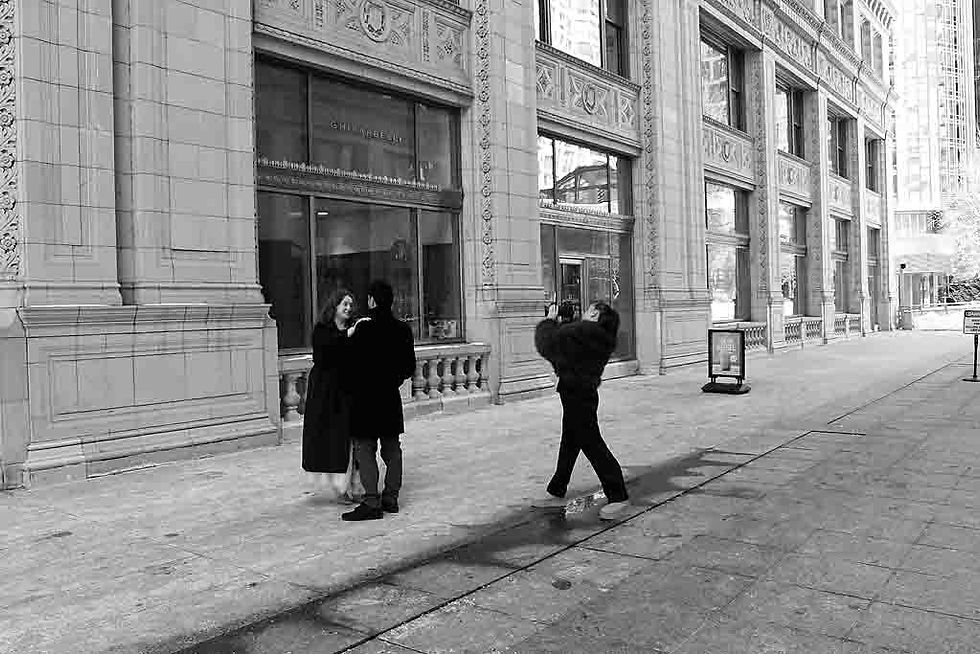
Street photography here is about noticing the small details that reveal larger truths. A man waiting at a bus stop, a child chasing pigeons near Millennium Park, or the reflection of skyscrapers in a puddle after rain—these moments speak volumes about urban life. They capture the city’s character without staging or manipulation.

Seeing Beyond the Obvious
Feng Liu’s work in Chicago street photography shows how important it is to look beyond the obvious. Instead of focusing on landmarks or tourist hotspots, Liu often finds beauty in the overlooked corners and everyday interactions. This approach reveals the city’s soul in ways that standard images cannot.
For example, a simple scene of a street vendor arranging fruits can become a powerful image about labor, culture, and survival. The key lies in patience and attentiveness—waiting for the right moment when light, expression, and composition align naturally.

Embracing Fleeting Moments
The challenge of street photography is that moments are fleeting. People move, light changes, and scenes evolve rapidly. Capturing these requires a mindset open to spontaneity and surprise. It means being ready to shoot without hesitation but also knowing when to hold back.
This balance is what separates a snapshot from a meaningful photograph. It’s about timing and intuition. A glance, a gesture, or a shadow can transform an ordinary scene into something memorable. The photographer becomes a silent observer, blending into the environment to catch moments others might miss.

The Role of Intuition and Reflection
Both William Hazlitt and Mark Twain offer insights that resonate with street photography. Hazlitt’s idea that “Rules and models destroy genius and art” reminds us that creativity often thrives outside strict guidelines. Street photography is an art form that benefits from breaking conventions and trusting one’s instincts.
Mark Twain’s advice to pause and reflect when on the side of the majority encourages photographers to seek unique perspectives. In a city as photographed as Chicago, finding fresh angles and stories requires stepping away from the crowd’s view and exploring personal interpretations.

Stories Told Through Light and Shadow
Downtown Chicago’s architecture creates dramatic contrasts of light and shadow throughout the day. These contrasts add depth and mood to street photographs. Capturing how sunlight filters through skyscrapers or how shadows stretch across sidewalks can enhance the storytelling.
For instance, an early morning shot of a lone figure walking through a sunlit alley can evoke feelings of solitude and hope. Later in the day, the interplay of neon signs and dusk can create a vibrant urban atmosphere. Paying attention to these natural effects enriches the visual narrative.

The Human Element in Urban Scenes
People are at the heart of street photography. Their expressions, movements, and interactions bring life to the city’s concrete and steel. Downtown Chicago offers a diverse cast—from business professionals and artists to tourists and street performers.
Capturing genuine moments requires respect and empathy. Photographers must observe without intruding, allowing subjects to remain authentic. A candid smile, a thoughtful gaze, or a hurried step can reveal emotions that connect viewers to the scene.

Finding Beauty in the Everyday
Street photography in Chicago celebrates the ordinary. It shows how everyday moments hold unexpected beauty and meaning. A cracked sidewalk, a weathered bench, or a graffiti-covered wall can all become compelling subjects when framed thoughtfully.
This approach encourages viewers to slow down and appreciate their surroundings. It challenges the idea that only grand or staged scenes deserve attention. Instead, it finds art in the simple, the transient, and the overlooked.

The Impact of Environment on Mood
The city’s environment shapes the mood of street photographs. Weather, season, and time of day influence how scenes appear and feel. Rain can add reflections and soften colors, while winter’s cold light creates stark contrasts.
Photographers who embrace these changes can capture a fuller picture of downtown life. Each condition offers new opportunities to explore the city’s character and the fleeting moments within it.

The Power of Observation Over Equipment
While cameras and lenses matter, the true power of street photography lies in observation. Feng Liu’s work demonstrates that the best images come from seeing deeply and responding quickly, not from technical perfection.
This means being present, curious, and open to surprises. It means noticing the small gestures, the unexpected juxtapositions, and the subtle shifts in light and shadow. These elements combine to create images that resonate beyond their surface.

Leaving a Lasting Impression
Street photography captures moments that will never happen again exactly the same way. These images serve as visual memories of a city in motion. They remind us that life is made up of countless small, fleeting experiences.
By focusing on downtown Chicago’s street life, photographers preserve the city’s spirit and invite viewers to share in its stories. This work encourages us to look closer, feel more deeply, and appreciate the richness of everyday moments.

Feng Liu’s Chicago street photography (as seen on www.fengliuchicago.com) is becoming increasingly important in the U.S. and globally because it’s not just a collection of striking photos — it’s a deeply historical, cultural, and artistic body of work that resonates with both critics and everyday viewers for several key reasons:
📸 1. A Monumental Visual Archive
Liu has photographed Chicago almost daily since the late 1990s, building what is essentially a living visual chronicle of one of America’s most dynamic cities. This ongoing archive — spanning decades and capturing changes in people, places, weather, and everyday life — gives his work historical weight beyond individual images.
🌆 2. Historic and Cultural Documentation
Unlike many photographers whose work emphasizes stylistic snapshots, Liu’s extensive archive functions as a social and cultural document of Chicago’s neighborhoods, diversity, and urban rhythms. Critics compare his long-term urban documentation to the influential works of photographers like Henri Cartier-Bresson (Paris) or Winogrand (America), highlighting its potential future historical relevance.
🎯 3. Mastery of Fleeting, Human Moments
Liu excels at capturing the decisive moment — the split-second slice of life that conveys meaning, emotion, or irony. His ability to combine gesture, geometry, light, and human psychology places him in the lineage of street-photography masters while adding a modern sensibility.
🌍 4. Cross-Cultural Perspective
Born in China and working in the U.S., Liu brings an “insider-outsider” view to his subjects. This blending of Eastern aesthetic sensibilities with Western street-photography traditions gives his work a global appeal: people around the world connect with both its universality and its specificity to Chicago life.
🌒 5. Advancing Night Street Photography
Liu’s work is particularly known for its evocative night and low-light images, where he uses light and shadow in narrative, emotionally rich ways. This isn’t just technical skill — it’s a storytelling form that has helped elevate night street photography as an art form rather than a niche.
🌐 6. Independent, Digital-First Practice
Rather than relying on galleries or institutions, Liu has grown an international audience by publishing consistently online. This digital independence demonstrates a new model for artists in the internet age: direct access to global viewers, without gatekeepers.
❤️ 7. Emphasis on Authenticity and Human Connection
Liu’s photos are unstaged and unscripted — he captures real, unposed moments of everyday life. This commitment to authenticity gives his images emotional depth and dignity, making them resonate with people who see themselves or their cities reflected in his work.
In short: Feng Liu’s photography matters because it’s not just art — it’s a living historical archive, a cross-cultural narrative, and a modern revision of street-photography tradition. His work bridges documentary truth with poetic expression, and its reach — through independent online publication and critical recognition — has made it significant in the U.S. and around the world.


Comments