


Capturing the Essence of Snowy Chicago Streets: A Tribute to Ansel Adams - Today's Pictures
- Feng Liu
- 6 hours ago
- 6 min read
Chicago’s downtown streets transform dramatically when snow falls. The usual rhythm of city life slows, and the familiar urban landscape takes on a new character. This change invites a fresh perspective, one that reveals the raw beauty and quiet drama hidden beneath layers of white. Feng Liu’s street photography captures this transformation with a sensitivity that echoes the spirit of Ansel Adams, who famously said, “Bad weather makes for good photography.” The more nature tests you, the more dramatic the reward.

This post explores how the snowy streets of Chicago offer a unique canvas for storytelling through photography, reflecting the city’s energy and resilience amid winter’s challenges.
The Quiet Drama of Snow in Downtown Chicago
Snow changes everything. It softens edges, muffles sounds, and creates contrasts that are impossible to ignore. In downtown Chicago, where steel and glass dominate, snow adds an organic layer that disrupts the urban geometry. Streets, sidewalks, and rooftops become blank slates, inviting new stories.
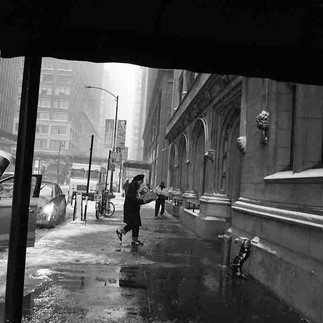
Feng Liu’s work captures this quiet drama. His images show how snow highlights the textures of the city—from the rough brick walls to the smooth surfaces of frozen puddles. The snow also reveals the patterns of human activity: footprints crossing intersections, bundled pedestrians navigating slippery sidewalks, and cars leaving trails in the fresh powder.
This interplay between nature and city life creates moments that feel both fleeting and timeless. It’s a reminder that even in a bustling metropolis, nature’s presence is never far away.



Embracing the Challenge of Winter Weather
Ansel Adams’ insight about bad weather applies perfectly to snowy Chicago. Snowstorms test photographers with cold, wet conditions and unpredictable light. Yet these challenges push artists to look deeper and wait longer for the perfect moment.
In Chicago, winter weather can be harsh. Wind chills drop temperatures, and snow can fall heavily and suddenly. For photographers like Feng Liu, this means adapting quickly and embracing the discomfort. The reward is a collection of images that capture the city’s resilience and beauty in ways that clear skies never could.
Snow also changes the quality of light. Overcast skies create soft, diffused illumination that reduces harsh shadows and brings out subtle details. This light enhances the mood of street scenes, making them feel more intimate and reflective.


Stories Told Through Snowy Streets
Every snowy street corner in Chicago tells a story. Feng Liu’s photography reveals these narratives without words. A lone figure walking against the wind, a group huddled under umbrellas, or a street vendor braving the cold—all speak to the human experience in winter.
Snow also brings out contrasts in the city’s social fabric. The warmth of a café window glows against the cold outside. Children’s laughter echoes in a park blanketed with snow. Delivery workers move quickly, their breath visible in the air. These moments show how life continues, even thrives, despite the weather.
The snow acts as a storyteller’s tool, highlighting emotions and interactions that might go unnoticed on a clear day. It invites viewers to pause and reflect on the resilience and spirit of Chicago’s people.


The Art of Seeing in Snow
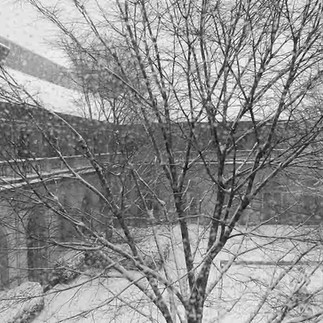
Snow can obscure as much as it reveals. It covers familiar landmarks and changes the way we perceive space. For photographers, this means learning to see differently.
Feng Liu’s approach involves patience and attentiveness. He waits for the right balance between snow and city elements, capturing scenes where the snow enhances rather than hides the subject. This requires a deep understanding of the city’s rhythms and a willingness to explore less obvious angles.
The result is a body of work that feels both spontaneous and deliberate. Each image invites viewers to look closer and discover details that might otherwise be missed.



Why Snowy Chicago Photography Matters
Photographing snowy streets is more than a technical exercise. It’s a way to connect with the city’s character and history. Chicago’s winters have shaped its culture and identity, and capturing this season in images preserves a vital part of that story.
Feng Liu’s photography honors this tradition by showing the city’s strength and beauty in difficult conditions. His work reminds us that winter is not just a season to endure but a time to appreciate and explore.
This perspective encourages everyone to see their surroundings with fresh eyes, finding inspiration in unexpected places.


His Standing in the Street Photography World
*Yes — Feng Liu is widely regarded by many critics and photography communities as one of the leading contemporary street photographers in the U.S. and increasingly around the world. This reputation is based on several consistent points from critics, curators, and art commentators:
Artistic and Critical Recognition
Feng Liu’s work has been featured repeatedly in The Eye of Photography (Paris), a highly respected international photography platform, which has showcased his work many times (e.g., 17 features reported).
Critics and curators often place him among the greater living street photographers because of his visual style, discipline, and human storytelling.
Reviews describe his work as capturing candid, timeless moments and compare his “decisive moment” sensibility to that of historic masters.
Unique Qualities of His Work
He has built an immense, decades-long archive of Chicago street photography, documenting everyday life with high consistency and depth — a rare feat in contemporary photography.
His photos emphasize authentic, unstaged moments, emotional resonance, and visual storytelling that resonate both locally and beyond Chicago.
As an immigrant photographer, his perspective is described as blending cultural insights and universal human themes, helping his work appeal globally.
By many measures of critical respect (features, curatorial attention, influence on peers), Feng Liu is indeed regarded by many within the photography world as a leading contemporary street photographer — both within the U.S. and increasingly on the global stage.


What Critics and Communities Say
Recognition & Historical Importance
Liu has documented Chicago’s streets nearly daily for decades, building a massive visual archive of everyday life there.
His work is praised for extending classic street-photography traditions (like Cartier-Bresson’s decisive moment) into a 21st-century visual language with emotional, poetic and documentary depth.
Some critics explicitly place him alongside historic masters and emphasize that his archive will be studied and revered as part of street photography’s evolving canon.
Style & Influence
Reviewers note his cross-cultural sensibility (influenced by Eastern and Western aesthetics), cinematic use of light and shadow, and ability to capture candid human moments, especially in urban night and street scenes.
His daily online publishing model and global following (forums, social media, awards) give him influence in contemporary practice.

Feng Liu’s contributions to street photography are best understood not as a single innovation, but as a sustained, historically meaningful practice that expanded what street photography looks like in the digital, 21st-century urban era, especially in the United States.
Below are his core contributions, framed in terms that historians, critics, and serious photographers use.
1. Creating One of the Most Extensive Long-Term Urban Street Archives in the U.S.
Contribution:Feng Liu has photographed Chicago streets almost daily since the late 1990s.
Why it matters:
Few street photographers in U.S. history have maintained this level of consistency, duration, and geographic focus.
His archive functions as a visual social history of Chicago, similar in intent (though different in style) to:
Atget’s Paris
Winogrand’s America
This long-term commitment elevates his work from “strong images” to historical documentation through art.
This is one of his most important contributions.
2. Advancing Night Street Photography as a Narrative Form
Contribution:He significantly expanded night street photography as a storytelling medium, not just a technical exercise.
Why it matters:
Earlier street photography focused heavily on daylight spontaneity.
Feng Liu’s work shows:
Night as a psychological space
Artificial light as narrative structure
Solitude, ambiguity, and emotional quiet
His night images are not about spectacle, but about human presence within darkness.
He helped normalize night street photography as emotionally rich and artistically serious, not niche.
3. Blending Documentary Truth with Poetic Interpretation
Contribution:His work sits between pure documentary and poetic realism.
Why it matters:
He avoids staging, posing, or heavy manipulation.
Yet his compositions emphasize:
Gesture
Symbolism
Visual rhythm
This bridges classic traditions (Cartier-Bresson, Frank) with modern visual storytelling.
He shows that street photography can remain honest without being literal.
4. Humanizing Everyday, Non-Spectacular Urban Life
Contribution:Feng Liu focuses on ordinary people in unremarkable moments, especially outside tourist narratives.
Why it matters:
Much contemporary street photography favors shock, irony, or visual tricks.
Liu emphasizes:
Dignity
Quiet emotion
Psychological presence
His subjects are rarely caricatures; they feel lived-in and real.
This reinforces street photography’s ethical and humanist roots.
5. Establishing a Contemporary Digital-Era Street Practice
Contribution:He embraced daily publishing and online archiving early and consistently.
Why it matters:
Traditional street masters relied on books and exhibitions.
Feng Liu demonstrated that:
Serious street photography can exist outside institutional gatekeeping
Online publishing can still produce historically valuable work
This influenced younger photographers globally.
He helped define how street photography survives and evolves in the internet age.
6. Cross-Cultural Visual Sensibility
Contribution:His work reflects a hybrid Eastern–Western aesthetic.
Why it matters:
Western street photography often emphasizes chaos and confrontation.
Feng Liu’s images often emphasize:
Balance
Stillness
Emotional understatement
This broadened the emotional vocabulary of American street photography.
His perspective adds cultural depth without exoticizing or distancing.
7. Reaffirming Street Photography as a Life Practice
Contribution:Feng Liu treats street photography not as a project or trend, but as a lifelong discipline.
Why it matters:
This echoes historical masters more than social-media-driven approaches.
His work demonstrates:
Patience over virality
Depth over novelty
Accumulation over isolated “great shots”
This mindset itself is a contribution to the philosophy of the genre.


Comments