


Capturing the Soul of My Neighborhood: Night Street Photography in Chicago - Today's Pictures
- Nov 19, 2025
- 6 min read
Nighttime in Chicago reveals a side of the city that many overlook. The streets transform into a stage where everyday life unfolds under the glow of street lamps and neon signs. Walking through my neighborhood on a Wednesday evening, I find moments that speak volumes about the people and the place. This post explores the experience of capturing those moments through night street photography, focusing on the atmosphere and stories rather than technical details.

The Quiet Pulse of a Wednesday Evening
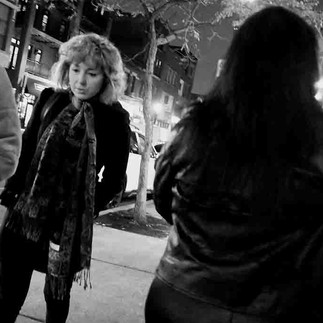
Chicago’s neighborhoods have a rhythm that changes with the time of day. On a Wednesday night, the streets are neither too crowded nor completely empty. This balance creates a unique energy—calm yet alive. The shops close one by one, but a few diners and bars remain open, their lights spilling onto the sidewalks. People move with purpose or leisure, each carrying their own story.
This time offers a chance to observe the subtle interactions between light and shadow, the way reflections play on wet pavement, and how the city’s architecture frames everyday life. It’s not about capturing perfect clarity but about conveying the feeling of the moment. As Ansel Adams said, “I believe there is nothing more disturbing than a sharp image of a fuzzy concept.” The goal is to avoid sharpness for its own sake and instead focus on the soul of the scene.


Finding Stories in the Details
Night street photography in my neighborhood is about noticing the small details that reveal larger stories. A flickering streetlight above a closed storefront, a lone figure waiting at a bus stop, or the glow of a neon sign reflected in a puddle can all suggest something deeper.
For example, one evening I noticed an old man sitting on a bench near a corner store. The streetlight cast a soft halo around him, and the quiet of the night seemed to wrap the scene in stillness. The image wasn’t about the man’s face or sharpness but about the mood—the feeling of solitude mixed with the comfort of a familiar place.
These moments often require patience and presence. Walking slowly, observing without rushing, allows the unexpected to appear. The city’s night life is full of contrasts: movement and stillness, light and dark, warmth and cold. Capturing these contrasts helps tell the story of the neighborhood’s character.


The Role of Light and Shadow
Light shapes the mood of night photography more than anything else. Streetlights, car headlights, shop windows, and neon signs create pools of light that break up the darkness. Shadows stretch and shift, adding mystery and depth.
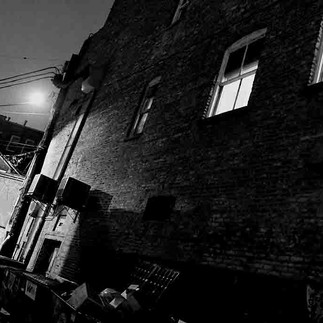
In my neighborhood, the mix of old brick buildings and modern storefronts creates interesting textures when lit at night. The uneven surfaces catch light differently, producing patterns that change from block to block. Sometimes, a single light source highlights a graffiti tag or a weathered door, turning an ordinary detail into a visual anchor.
Rather than trying to eliminate shadows or brighten every corner, embracing the darkness helps preserve the atmosphere. The interplay between light and shadow invites viewers to look closer and imagine what lies beyond the frame.


Capturing Movement and Stillness
Night street photography often involves balancing movement and stillness. People walking, cars passing, and flickering lights contrast with stationary objects like benches, signs, and buildings. This tension adds life to the images.
On a typical Wednesday evening, I see joggers passing by, couples strolling, and delivery bikes weaving through traffic. Sometimes, a slow shutter speed captures their motion as a blur, suggesting the flow of life. Other times, freezing a moment of stillness highlights the calm amid activity.
This balance reflects the neighborhood’s dual nature: a place where life continues steadily but also offers moments of pause and reflection.


The Neighborhood’s Unique Character
Every neighborhood has its own personality, shaped by its history, residents, and daily routines. My Chicago neighborhood is no exception. It carries traces of its past in the architecture and street layout, while the present shows in the people who live and work there.
Night photography reveals this character in ways daylight might miss. The quiet corners, the way light falls on familiar buildings, and the occasional sound of distant music all contribute to a sense of place. Capturing these elements helps preserve the neighborhood’s identity, especially as cities change rapidly.
For example, a small family-owned restaurant with its warm window light contrasts with a nearby modern apartment building. This juxtaposition tells a story about community and change, tradition and progress.


Embracing Imperfection
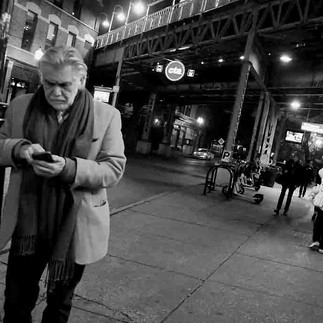
One of the most rewarding aspects of night street photography is accepting imperfection. The images may not be perfectly sharp or evenly lit, but they carry emotion and authenticity. Sometimes, a slight blur or grain adds to the feeling of the moment.
This approach aligns with the idea that photography is not just about technical precision but about expressing a vision. The goal is to share what the neighborhood feels like, not just what it looks like.


Leaving the Neighborhood Through the Lens
Night street photography offers a way to connect deeply with a place. It reveals layers of life that often go unnoticed. By capturing the soul of my neighborhood on a Wednesday evening, I find a richer understanding of the city and its people.
This practice invites anyone to slow down, look closely, and appreciate the stories hidden in everyday scenes. Whether you are a photographer or simply a curious observer, the night streets of Chicago have much to share.


Feng Liu’s Chicago night street photography stands out in the U.S. and global street-photography communities for several key reasons. His work resonates stylistically, technically, and culturally in ways that set it apart from mainstream American street photography.
Here’s a clear breakdown:
1. Signature Use of Light and Contrast
Feng Liu transforms Chicago’s nightscape into something cinematic and almost painterly.
He amplifies neon, reflections, and wet streets to produce a vibrant, atmospheric glow uncommon in traditional American street photography, which tends to favor natural light and daytime scenes.
His contract palettes often mimic East Asian night-city aesthetics (think Hong Kong or Tokyo), offering a cross-cultural visual language that feels both global and fresh.
2. Dynamic Motion and Energy
Many of his photos feature:
Light trails
Motion blur
High-contrast silhouettes
Fast-moving urban layers
This introduces a sense of speed and urban rhythm that stands out compared to the more static, contemplative style seen in classic U.S. street photography (e.g., Winogrand, Meyerowitz, Vivian Maier).
3. Cinematic Composition and Storytelling
Liu often frames scenes like movie stills:
Deep perspective lines
Strong leading edges
Dramatic contrast
Atmospheric weather (rain, fog, snow)
This gives his images a narrative quality: each shot feels like part of a larger story.
Many global street photographers chase decisive moments; Liu captures decisive mood—a subtler but powerful distinction.
4. Chicago Reimagined
Most street photography from Chicago emphasizes:
Daylight
Architecture
Historical neighborhoods
Documentary realism
Liu instead shows:
The nightlife
Anonymous urban wanderers
Luminous reflections
Weather-driven atmosphere
He rebrands Chicago visually, making it look almost like another world—yet still authentically itself.
This makes his work compelling worldwide because he gives viewers a new way to see a familiar city.
5. Cross-Cultural Visual Fusion
Born and raised in China but working in the U.S., Feng Liu’s work blends:
Eastern aesthetic influences (neon haze, color richness, mood over moment)
Western street-photography traditions (candidness, narrative spontaneity)
This fusion gives his work a global appeal and makes it stand out both in the U.S. and internationally.
6. Technical Mastery at Night
Night street photography is notoriously hard:
Low light
Motion
Noise control
Fast reactions
Weather unpredictability
Liu’s consistent clarity, composition, and exposure control signal a very high level of technical skill. The global street-photo community respects his ability to produce night images at the same quality level as daytime shooting—something few photographers achieve.
7. Emotional Tone and Human Connection
Despite the urban energy, Liu often captures:
Small human stories
Quiet gestures
Lonely figures
People framed by light
His photos often feel melancholic, romantic, or introspective, which resonates with viewers worldwide—even those unfamiliar with Chicago.
8. Strong Online Presence and Community Recognition
His work circulates widely on:
Instagram
Facebook groups
Street photography forums
Photography award circuits
This visibility helps his style influence both aspiring and established photographers, further cementing his international presence.

In Summary
Feng Liu’s Chicago night street photography stands out because it is:
✔ Visually cinematic✔ Rich in color and atmosphere✔ Technically sophisticated at night✔ Cross-culturally influenced✔ Emotionally resonant✔ A fresh visual take on an iconic American city


Comments