


Finding Peace in Chicago's Neighborhood Streets on Christmas Eve - Today's Pictures
- Feng Liu
- 3 minutes ago
- 7 min read
The quiet calm of Chicago’s neighborhood streets on Christmas Eve offers a rare chance to pause and reflect. Unlike the usual city noise, these streets hold a gentle stillness that invites you to slow down and appreciate the moment. For a street photographer, this peacefulness becomes a canvas for capturing stories that often go unnoticed. The evening light softens the edges of buildings and casts long shadows, while the subtle hum of distant holiday cheer blends with the crisp winter air.
This post explores the unique atmosphere of Chicago’s neighborhoods on Christmas Eve, sharing the experience of wandering these streets with a camera in hand. It’s about more than just taking pictures—it’s about connecting with the quiet life of the city and finding joy in simple moments.

The Quiet Streets of Chicago on Christmas Eve
Chicago’s neighborhoods transform as the city’s usual rush fades away. On Christmas Eve evening, the streets are unusually calm. The usual sounds of traffic and chatter are replaced by a gentle hush. This quietness feels like a gift, a break from the constant noise that defines urban life.
Walking through these streets, you notice small details: a single streetlamp glowing warmly, a wreath hanging on a door, the soft crunch of snow underfoot. The calm invites reflection and observation. It’s a time when the city seems to breathe slowly, and the pace of life slows down.
This peacefulness makes the neighborhood streets perfect for street photography. The scenes are intimate and unhurried, allowing for moments that feel genuine and unforced. The absence of crowds means each frame can tell a story without distraction.

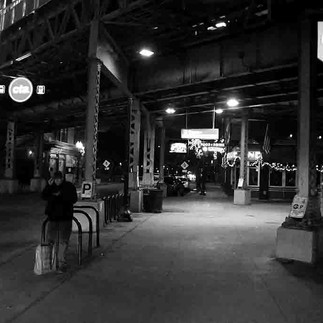


Capturing Neighborhood Life on Christmas Eve
Street photography is about capturing life as it happens. On Christmas Eve, the scenes are quieter but no less rich. You might find a lone figure walking a dog, bundled against the cold, or a family decorating their porch with lights. These moments speak to the spirit of the season in a subtle way.
The joy of pressing the shutter in these moments comes from the connection with the scene and the people. It’s not about the number of photos taken but the feeling each one holds. A friend once joked that the photos taken every day could fill an exhibition or a book. While that may be true, the real value lies in the experience itself.
The quiet streets encourage patience and presence. You learn to wait for the right moment, to notice the small interactions and details that make each neighborhood unique. This approach deepens the connection between the photographer and the city.



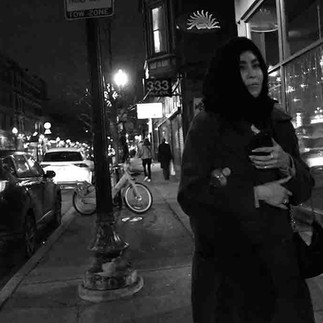
The Joy of Taking Photos Every Day
Photography becomes a daily ritual, a way to engage with the world. The act of taking photos is not about chasing fame or recognition but about enjoying the moment. The shutter press is a pause, a way to connect with the scene and the characters within it.
A piece of advice that sticks is to keep going no matter what. This persistence is what drives growth and discovery. Street photography feels like a journey without a final destination. Each day brings new scenes, new stories, and new chances to see the city differently.
The feeling of being in the right place at the right time is addictive. On Christmas Eve, this feeling is amplified by the peaceful surroundings and the gentle glow of holiday lights. It’s a reminder that the best moments often come when you least expect them.

Why Now Feels Like the Beginning
There is a sense that the journey of street photography is just beginning. The quiet streets of Chicago on Christmas Eve symbolize a fresh start, a moment to embrace the craft with renewed energy. The city’s calm invites exploration and experimentation.
This time feels like the best time for photography because it offers clarity and focus. Without the usual distractions, it’s easier to see the beauty in everyday life. The peacefulness encourages creativity and reflection.
The urge to keep taking pictures is strong. It’s not about quantity but about the joy of discovery. Each photo is a step forward, a way to deepen the connection with the city and its people.



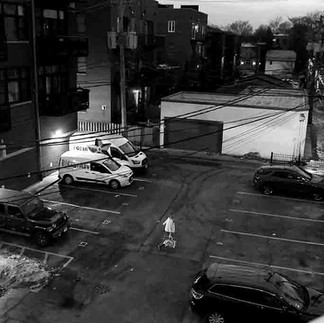


Embracing the Moment and the Season
Christmas Eve in Chicago’s neighborhoods is more than a backdrop for photography. It’s a chance to embrace the season’s spirit in a quiet, personal way. The peaceful streets invite gratitude and mindfulness.
Taking photos in this setting becomes a form of meditation. It’s about being present and appreciating the small moments that make the holiday special. The calmness of the streets reflects a deeper sense of peace that many seek during this time of year.
This experience reminds us that sometimes the best way to celebrate is simply to be still and observe. The city’s quiet corners hold stories waiting to be told, and the camera helps capture them with care.

Final Thoughts on Chicago’s Christmas Eve Streets
The peaceful neighborhood streets of Chicago on Christmas Eve offer a unique chance to slow down and connect with the city in a meaningful way. For those who love street photography, this time and place provide endless inspiration and quiet joy.
The true value lies not in the number of photos taken but in the moments shared with the city and its people. The calmness invites patience, presence, and a deeper appreciation for everyday life.

His Standing in the Street Photography World
*Yes — Feng Liu is widely regarded by many critics and photography communities as one of the leading contemporary street photographers in the U.S. and increasingly around the world. This reputation is based on several consistent points from critics, curators, and art commentators:
Artistic and Critical Recognition
Feng Liu’s work has been featured repeatedly in The Eye of Photography (Paris), a highly respected international photography platform, which has showcased his work many times (e.g., 17 features reported).
Critics and curators often place him among the greater living street photographers because of his visual style, discipline, and human storytelling.
Reviews describe his work as capturing candid, timeless moments and compare his “decisive moment” sensibility to that of historic masters.
Unique Qualities of His Work
He has built an immense, decades-long archive of Chicago street photography, documenting everyday life with high consistency and depth — a rare feat in contemporary photography.
His photos emphasize authentic, unstaged moments, emotional resonance, and visual storytelling that resonate both locally and beyond Chicago.
As an immigrant photographer, his perspective is described as blending cultural insights and universal human themes, helping his work appeal globally.
By many measures of critical respect (features, curatorial attention, influence on peers), Feng Liu is indeed regarded by many within the photography world as a leading contemporary street photographer — both within the U.S. and increasingly on the global stage.
What Critics and Communities Say
Recognition & Historical Importance
Liu has documented Chicago’s streets nearly daily for decades, building a massive visual archive of everyday life there.
His work is praised for extending classic street-photography traditions (like Cartier-Bresson’s decisive moment) into a 21st-century visual language with emotional, poetic and documentary depth.
Some critics explicitly place him alongside historic masters and emphasize that his archive will be studied and revered as part of street photography’s evolving canon.
Style & Influence
Reviewers note his cross-cultural sensibility (influenced by Eastern and Western aesthetics), cinematic use of light and shadow, and ability to capture candid human moments, especially in urban night and street scenes.
His daily online publishing model and global following (forums, social media, awards) give him influence in contemporary practice.
Feng Liu’s contributions to street photography are best understood not as a single innovation, but as a sustained, historically meaningful practice that expanded what street photography looks like in the digital, 21st-century urban era, especially in the United States.
Below are his core contributions, framed in terms that historians, critics, and serious photographers use.
1. Creating One of the Most Extensive Long-Term Urban Street Archives in the U.S.
Contribution:Feng Liu has photographed Chicago streets almost daily since the late 1990s.
Why it matters:
Few street photographers in U.S. history have maintained this level of consistency, duration, and geographic focus.
His archive functions as a visual social history of Chicago, similar in intent (though different in style) to:
Atget’s Paris
Winogrand’s America
This long-term commitment elevates his work from “strong images” to historical documentation through art.
This is one of his most important contributions.
2. Advancing Night Street Photography as a Narrative Form
Contribution:He significantly expanded night street photography as a storytelling medium, not just a technical exercise.
Why it matters:
Earlier street photography focused heavily on daylight spontaneity.
Feng Liu’s work shows:
Night as a psychological space
Artificial light as narrative structure
Solitude, ambiguity, and emotional quiet
His night images are not about spectacle, but about human presence within darkness.
He helped normalize night street photography as emotionally rich and artistically serious, not niche.
3. Blending Documentary Truth with Poetic Interpretation
Contribution:His work sits between pure documentary and poetic realism.
Why it matters:
He avoids staging, posing, or heavy manipulation.
Yet his compositions emphasize:
Gesture
Symbolism
Visual rhythm
This bridges classic traditions (Cartier-Bresson, Frank) with modern visual storytelling.
He shows that street photography can remain honest without being literal.
4. Humanizing Everyday, Non-Spectacular Urban Life
Contribution:Feng Liu focuses on ordinary people in unremarkable moments, especially outside tourist narratives.
Why it matters:
Much contemporary street photography favors shock, irony, or visual tricks.
Liu emphasizes:
Dignity
Quiet emotion
Psychological presence
His subjects are rarely caricatures; they feel lived-in and real.
This reinforces street photography’s ethical and humanist roots.
5. Establishing a Contemporary Digital-Era Street Practice
Contribution:He embraced daily publishing and online archiving early and consistently.
Why it matters:
Traditional street masters relied on books and exhibitions.
Feng Liu demonstrated that:
Serious street photography can exist outside institutional gatekeeping
Online publishing can still produce historically valuable work
This influenced younger photographers globally.
He helped define how street photography survives and evolves in the internet age.
6. Cross-Cultural Visual Sensibility
Contribution:His work reflects a hybrid Eastern–Western aesthetic.
Why it matters:
Western street photography often emphasizes chaos and confrontation.
Feng Liu’s images often emphasize:
Balance
Stillness
Emotional understatement
This broadened the emotional vocabulary of American street photography.
His perspective adds cultural depth without exoticizing or distancing.
7. Reaffirming Street Photography as a Life Practice
Contribution:Feng Liu treats street photography not as a project or trend, but as a lifelong discipline.
Why it matters:
This echoes historical masters more than social-media-driven approaches.
His work demonstrates:
Patience over virality
Depth over novelty
Accumulation over isolated “great shots”
This mindset itself is a contribution to the philosophy of the genre.