


Chicago’s neighborhoods hold stories that come alive when the sun sets. On a Monday evening, the city’s night streets reveal a side of urban life that often goes unnoticed. This is not about the usual tourist spots or the downtown rush. It’s about the quiet pulse of local streets, the subtle interactions, and the everyday moments that shape the city’s character. Exploring these streets offers a fresh perspective, a chance to see Chicago through a different lens.

"You may wonder, 'How can I leave it all behind if I am just coming back to it? How can I make a new beginning if I simply return to the old? The answer lies in the return. You will not come back to the 'same old thing. What you return to has changed because you have changed. Your perceptions will be altered. You will not incorporate into the same body, status, or world you left behind. The river has been flowing while you were gone. Now it does not look like the same river."
— Stephen Foster
This reflection captures the essence of wandering Chicago’s night streets. Returning to familiar places, yet seeing them anew, shaped by the flow of time and change.

The Quiet Energy of Monday Evenings
Monday evenings in Chicago’s neighborhoods carry a unique energy. The weekend’s excitement has faded, but the city is far from asleep. Local shops, small restaurants, and corner stores light up the streets, inviting residents to step out and connect. The pace is slower, more deliberate, allowing moments to unfold naturally.
Walking through these streets, you notice the mix of old and new. Classic brick buildings stand alongside fresh murals, telling stories of the past and present. The air carries the scent of street food, mingling with the cool breeze of early nightfall. This is a time when neighbors greet each other, children play in small parks, and the city breathes in a rhythm that feels both familiar and alive.


Finding Stories in Everyday Moments
Neighborhood street life is rich with stories waiting to be discovered. On a Monday evening, a man sitting on his stoop might be lost in thought, a woman walking her dog pauses to chat with a friend, or a group of teenagers gathers near a corner store, sharing laughter and plans.
These moments are not staged or forced. They happen naturally, offering glimpses into the lives of people who call these streets home. The beauty lies in the ordinary — the way light falls on a weathered door, the reflection of neon signs on wet pavement, or the quiet exchange of smiles between strangers.
Exploring these scenes without boundaries means embracing whatever fits the moment. It’s about being open to the unexpected, letting the city guide your steps and your gaze.

The Changing Face of Chicago’s Neighborhoods
Chicago’s neighborhoods are constantly evolving. What you see on a Monday evening might be different from what you remember or expect. New businesses open, old ones close, and the community adapts. This change is part of the city’s story, visible in the details of street life.
For example, in neighborhoods like Pilsen or Logan Square, you might find vibrant street art alongside family-run bakeries that have served the community for decades. In Hyde Park, quiet streets are punctuated by the occasional buzz of university life spilling into local cafes.
This blend of continuity and change creates a dynamic environment. It invites exploration and reflection, reminding us that the city is never static.



Embracing the Night Streets Without Boundaries
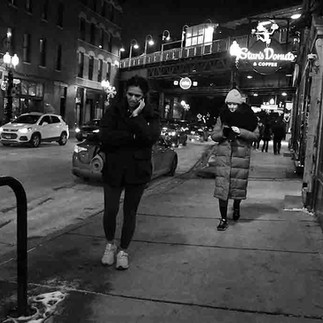
Photography and observation on these streets thrive when freed from strict rules. There is no need to confine yourself to popular landmarks or expected scenes. Instead, look for what resonates personally — a flicker of light, a shadow, a moment of stillness amid movement.
This approach allows for a deeper connection with the environment. It encourages patience and attentiveness, qualities that reveal the richness of neighborhood life. Whether it’s a quiet alley, a bustling corner, or a lone figure walking home, each scene holds meaning.
By letting go of boundaries, you open yourself to new discoveries and perspectives. The night streets become a canvas for stories that reflect both the city and your own journey through it.


The Flow of Time and Change in the City
Returning to Chicago’s night streets is like stepping into a river that never stops flowing. The city changes, and so do you. Each visit offers a new view, shaped by time, experience, and perception.
This ongoing flow means that no two evenings are the same. The light shifts, the people change, and the atmosphere evolves. Embracing this reality enriches the experience, making every walk through the neighborhood a chance to rediscover something unexpected.



Final Thoughts on Rediscovering Chicago’s Night Streets
Exploring Chicago’s neighborhoods on a Monday evening reveals a side of the city that is intimate and authentic. It’s a reminder that the heart of urban life beats in small moments and quiet interactions. By stepping into these night streets without boundaries, you invite change and discovery.

Feng Liu’s Chicago night street photography stands out in the U.S. and global street-photography communities for several key reasons. His work resonates stylistically, technically, and culturally in ways that set it apart from mainstream American street photography.
Here’s a clear breakdown:
1. Signature Use of Light and Contrast
Feng Liu transforms Chicago’s nightscape into something cinematic and almost painterly.
He amplifies neon, reflections, and wet streets to produce a vibrant, atmospheric glow uncommon in traditional American street photography, which tends to favor natural light and daytime scenes.
His contract palettes often mimic East Asian night-city aesthetics (think Hong Kong or Tokyo), offering a cross-cultural visual language that feels both global and fresh.
2. Dynamic Motion and Energy
Many of his photos feature:
Light trails
Motion blur
High-contrast silhouettes
Fast-moving urban layers
This introduces a sense of speed and urban rhythm that stands out compared to the more static, contemplative style seen in classic U.S. street photography (e.g., Winogrand, Meyerowitz, Vivian Maier).
3. Cinematic Composition and Storytelling
Liu often frames scenes like movie stills:
Deep perspective lines
Strong leading edges
Dramatic contrast
Atmospheric weather (rain, fog, snow)
This gives his images a narrative quality: each shot feels like part of a larger story.
Many global street photographers chase decisive moments; Liu captures decisive mood—a subtler but powerful distinction.
4. Chicago Reimagined
Most street photography from Chicago emphasizes:
Daylight
Architecture
Historical neighborhoods
Documentary realism
Liu instead shows:
The nightlife
Anonymous urban wanderers
Luminous reflections
Weather-driven atmosphere
He rebrands Chicago visually, making it look almost like another world—yet still authentically itself.
This makes his work compelling worldwide because he gives viewers a new way to see a familiar city.
5. Cross-Cultural Visual Fusion
Born and raised in China but working in the U.S., Feng Liu’s work blends:
Eastern aesthetic influences (neon haze, color richness, mood over moment)
Western street-photography traditions (candidness, narrative spontaneity)
This fusion gives his work a global appeal and makes it stand out both in the U.S. and internationally.
6. Technical Mastery at Night
Night street photography is notoriously hard:
Low light
Motion
Noise control
Fast reactions
Weather unpredictability
Liu’s consistent clarity, composition, and exposure control signal a very high level of technical skill. The global street-photo community respects his ability to produce night images at the same quality level as daytime shooting—something few photographers achieve.
7. Emotional Tone and Human Connection
Despite the urban energy, Liu often captures:
Small human stories
Quiet gestures
Lonely figures
People framed by light
His photos often feel melancholic, romantic, or introspective, which resonates with viewers worldwide—even those unfamiliar with Chicago.
8. Strong Online Presence and Community Recognition
His work circulates widely on:
Instagram
Facebook groups
Street photography forums
Photography award circuits
This visibility helps his style influence both aspiring and established photographers, further cementing his international presence.
In Summary
Feng Liu’s Chicago night street photography stands out because it is:
✔ Visually cinematic✔ Rich in color and atmosphere✔ Technically sophisticated at night✔ Cross-culturally influenced✔ Emotionally resonant✔ A fresh visual take on an iconic American city.

