top of page

All Photographs © Feng Liu

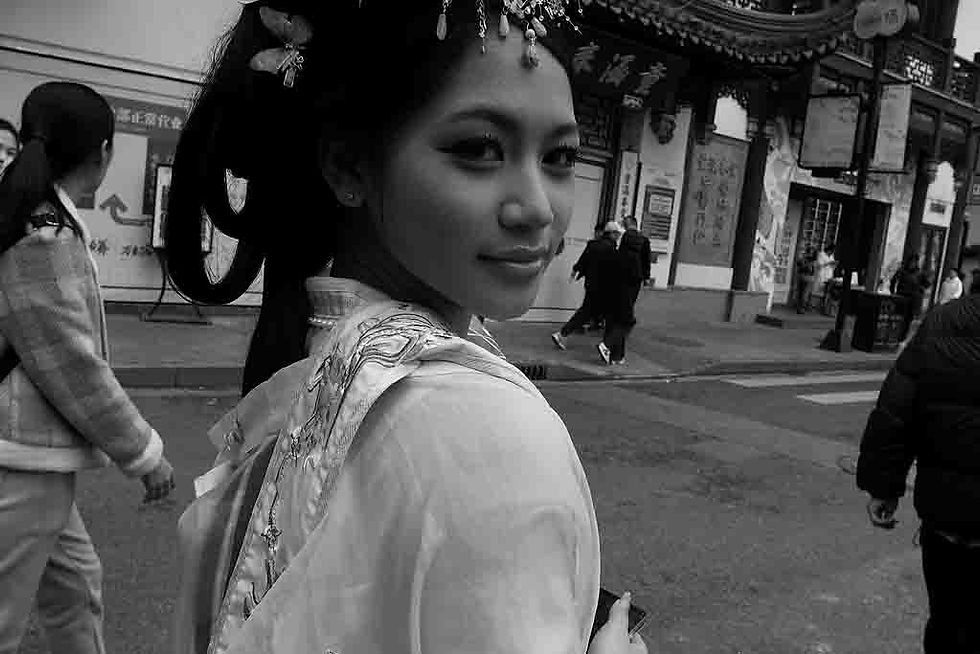
Shanghai’s streets offer a unique stage where history and modern life meet. Among the city’s vibrant scenes, one striking image often catches the eye: ladies dressed in traditional Chinese attire. These moments, captured through the lens of street photography, reveal more than just fashion. They tell stories of culture, identity, and timeless elegance.


The Charm of Traditional Dress in a Modern City


Walking through Shanghai, you might spot women wearing qipao or cheongsam, garments that have been part of Chinese culture for over a century. These dresses, with their fitted cuts and intricate patterns, stand out against the backdrop of skyscrapers and bustling streets. The contrast between old and new creates a powerful visual narrative.


The qipao is not just clothing; it is a symbol of grace and heritage. Each dress carries details that reflect regional styles, personal taste, and sometimes family history. When ladies wear these dresses on the streets, they bring a piece of tradition into everyday life, reminding passersby of Shanghai’s rich cultural roots.


Street Photography as a Window into Culture


Street photography captures candid moments that often go unnoticed. In Shanghai, photographers like Feng Liu have made a name by focusing on these authentic glimpses of life. His work highlights how traditional dress continues to live in the city’s daily rhythm.


Photographing ladies in traditional dress requires patience and respect. These images are not staged but found in natural settings—walking along the Bund, waiting at a street corner, or sitting in a quiet café. The photographer’s eye catches the subtle details: the way the fabric moves, the soft light on embroidered flowers, or the confident posture of the wearer.


This style of photography does more than document fashion. It preserves a cultural moment, showing how tradition adapts and thrives in a fast-changing urban environment.


Stories Behind the Dresses


Each lady in traditional dress has her own story. Some wear the qipao for special occasions like weddings or festivals. Others choose it as a daily expression of identity or a way to connect with their heritage. In Shanghai, where East meets West, these dresses become a bridge between generations.


For example, a young woman might wear a modernized qipao with bold colors and contemporary cuts, blending old styles with new trends. An older woman might prefer a classic silk dress with delicate embroidery, honoring the craftsmanship passed down through her family.


These personal choices add layers of meaning to the street scenes. They show how tradition is not static but alive, evolving with each wearer.


The Visual Impact of Traditional Dress on Shanghai’s Streets


The presence of traditional dress in Shanghai’s urban landscape creates striking visual contrasts. The sleek lines of a qipao against the sharp angles of glass buildings, or the soft textures of silk next to concrete sidewalks, make for compelling photographs.


Colors play a big role too. Reds, golds, and blues in the dresses catch the eye and bring warmth to the city’s often gray palette. Patterns inspired by nature—flowers, birds, waves—add a poetic touch to the streetscape.


These elements combine to create images that are both beautiful and meaningful. They invite viewers to pause and appreciate the blend of history and modernity.


Why This Matters Today


In a city known for rapid development and globalization, traditional dress on the streets is a reminder of cultural continuity. It shows that even as Shanghai grows and changes, its people hold on to their roots.


For visitors and locals alike, these moments offer a chance to connect with the city’s soul. They encourage curiosity about the stories behind the dresses and the women who wear them.


Street photography capturing these scenes plays an important role in sharing this cultural richness with a wider audience. It preserves fleeting moments that might otherwise be lost in the rush of daily life.


Embracing Tradition in Everyday Life


The ladies in traditional dress on Shanghai’s streets inspire a deeper appreciation for cultural heritage. Their presence encourages others to explore and celebrate their own histories through clothing and style.


This trend also sparks conversations about identity and belonging in a modern world. It shows how fashion can be a form of storytelling, connecting past and present.


For those interested in culture, art, or photography, these street scenes offer endless inspiration. They remind us that elegance is not just about appearance but about the stories we carry and share.


Growing up in Shanghai, a city where history and modern life collide, shaped my view of the world and my art. Shanghai is my hometown, the place where my roots run deep and where my passion for street photography began. Moving to Chicago to pursue this art form was a leap into the unknown, but it was also a continuation of a story that started on the streets I once walked as a child. This journey is about more than just photography; it is about memory, identity, and the rich culture that Shanghai gave me.


The Foundation of My Art in Shanghai


Shanghai is a city of contrasts. It is modernized, with towering skyscrapers and fast-paced life, yet it holds a deep well of culture and history. Growing up there, I was surrounded by stories embedded in the streets, the old neighborhoods, and the faces of the people. My parents, both doctors, supported my interests from a young age. Our home had two cameras, and my father encouraged my creativity through painting, while my mother shared her love of music. These gifts shaped my artistic sensibility even though I later became an engineer.


I remember the pride I felt as a teenager when my work was shown at the Shanghai Art Museum. That moment confirmed that the city had given me a foundation in art that I carry with me today. The streets of Shanghai taught me how to see life’s details—the way light falls on a building, the expressions of passersby, the quiet moments amid the city's noise.


Shanghai’s Changing Streets and Fading Faces


Returning to Shanghai after years away, I noticed how much the city had changed. The modern skyline had grown, and many old neighborhoods had been replaced by new developments. What surprised me most was the scarcity of local people in the streets. The city felt less like the place I knew and more like a global hub where the local culture was harder to find.


Despite this, the memories remain vivid. Walking the same streets where I played as a child, I see scenes that have not changed. The small shops, the narrow alleys, the familiar corners—they hold stories that time cannot erase. These memories are the heart of my photography. They remind me that while cities evolve, the essence of a place lives on in its history and in the people who remember it.


From Shanghai to Chicago: A New Chapter


Moving to Chicago was a bold step. It was a chance to explore street photography in a new environment, with different stories and faces. Chicago’s streets have their own rhythm and character, but my perspective is always influenced by where I came from. Being proud to be Shanghainese means carrying a piece of Shanghai’s culture and history with me, no matter where I go.


In Chicago, I find myself drawn to moments that echo the feelings I had in Shanghai—the quiet, the unexpected, the everyday scenes that tell a story. My photography reflects a blend of two worlds: the rich heritage of my hometown and the fresh experiences of a new city.


The Role of Memory and Heritage in My Work


Memory is a powerful force in my photography. It connects the past with the present and gives meaning to the images I capture. The streets of Shanghai, with their layers of history, taught me to look beyond the surface. Every photograph is a way to preserve a moment, a feeling, or a story that might otherwise be lost.


Heritage is equally important. Being Shanghainese is not just about where I was born; it is about the culture, the values, and the artistic spirit that shaped me. This heritage is reflected in the way I approach my work—the attention to detail, the respect for tradition, and the desire to tell honest stories.


The Lasting Impact of Childhood and Family


My childhood in Shanghai was filled with artistic influences. My father’s paintings and my mother’s music created an environment where creativity was encouraged. Even though I pursued engineering, these early experiences never left me. They now surface in my photography, where I combine technical skill with artistic vision.


Having two cameras at home gave me a unique advantage. I learned to see the world through a lens early on, and this shaped my understanding of light, composition, and storytelling. My family’s support was a gift that I carry with gratitude.


Walking the Same Streets, Seeing New Stories


One of the most powerful experiences is walking the streets of Shanghai today and recognizing the scenes from my childhood. The city has changed, but some things remain the same. These moments of continuity inspire me to capture the essence of a place that is both familiar and new.


Photography allows me to hold onto these memories and share them with others. It is a way to honor my roots and to keep the spirit of Shanghai alive in my work.


Embracing Identity Through Photography


Being proud to be Shanghainese means embracing a complex identity. It means acknowledging the changes in my hometown while celebrating its enduring culture. It means carrying the lessons of my past into my present and future.


My journey from Shanghai to Chicago is more than a physical move; it is a journey of self-discovery and artistic growth. Through my photography, I connect with my heritage and express the stories that matter to me.


Feng Liu Chicago © Feng Liu
bottom of page