


Chicago’s neighborhoods come alive when the sun sets. The city’s evening streets reveal a side of urban life that often escapes the daytime rush. Feng Liu’s night street photography captures this unique energy, offering a window into the rhythms and stories of Chicago’s neighborhoods after dark. His work invites us to see the city not just as a place, but as a living, breathing experience.

Henri Cartier-Bresson once said, “It is through living that we discover ourselves, at the same time as we discover the world around us.” This idea resonates deeply with Liu’s images. They don’t just show scenes; they reveal moments of discovery, connection, and the unexpected beauty found in everyday life.





The Quiet Pulse of Chicago’s Evening Streets
When night falls, Chicago’s streets transform. The familiar sounds and sights of the day give way to a different kind of life. Streetlights cast long shadows, neon signs flicker to life, and the hum of conversations and footsteps fills the air. Feng Liu’s photography captures this quiet pulse with a patient eye.
His images often focus on ordinary places — a corner store, a dimly lit alley, a bus stop — but through his lens, these spots become stages for human stories. The glow of a streetlamp highlights a lone figure waiting, the reflection of headlights paints wet pavement, and the blur of passing cars suggests movement and change. These details bring the city’s evening life into sharp focus.

Discovering Neighborhood Character Through Light and Shadow
Liu’s photographs show how light and shadow shape the character of Chicago’s neighborhoods at night. The contrast between bright storefronts and darkened streets creates a mood that feels both intimate and mysterious. This interplay invites viewers to look closer and imagine the lives unfolding in these spaces.
For example, a photo might show a small group gathered outside a late-night diner, their faces lit by warm interior light. Nearby, a graffiti-covered wall fades into darkness, hinting at stories untold. These contrasts reflect the diversity and complexity of Chicago’s urban fabric, where different worlds coexist side by side.


Capturing Fleeting Moments of Connection
One of the most compelling aspects of Feng Liu’s night street photography is its focus on human connection. Even in the city’s vastness, moments of interaction stand out — a shared glance, a brief conversation, a gesture caught in passing. These fleeting exchanges reveal the social life that continues after dark.
Liu’s work reminds us that the city is not just a backdrop but a place where people live, meet, and discover themselves. His images echo Cartier-Bresson’s belief that reality offers so much wealth that we must choose what to capture. Liu’s choices highlight the small, meaningful moments that define neighborhood life.

The Role of Luck and Timing in Street Photography
Henri Cartier-Bresson famously said, “Of course it’s all luck.” This statement reflects the unpredictable nature of street photography. Capturing the perfect moment requires being in the right place at the right time, but also having the sensitivity to see what others might miss.
Feng Liu’s night photography demonstrates this balance. His images feel spontaneous yet deliberate, as if he waits patiently for the scene to reveal itself. This approach allows him to document authentic moments without staging or interference, preserving the genuine spirit of Chicago’s night streets.


Seeing Chicago Through a New Lens
Feng Liu’s work challenges us to see Chicago differently. Instead of focusing on landmarks or tourist spots, he turns his attention to everyday scenes that reveal the city’s soul. His photographs show how neighborhoods come alive at night, full of stories waiting to be discovered.
This perspective encourages us to slow down and appreciate the details around us. It invites us to explore our own neighborhoods with fresh eyes, noticing the light, the people, and the moments that make each place unique.

Final Thoughts on Night Street Photography and Urban Life
Feng Liu’s night street photography offers more than just images; it provides a way to experience Chicago’s neighborhoods through their evening life. His work captures the city’s quiet energy, the interplay of light and shadow, and the human connections that define urban living.

Chicago’s streets at night offer a unique canvas for those who seek more than just images. They reveal stories, moods, and moments that go beyond the surface. For photographers like Feng Liu, the city’s neighborhoods transform into living art after dark. This blog explores how night street photography in Chicago captures the essence of evening life, focusing on artistry rather than fame or commercial success.

The Heartbeat of Chicago’s Neighborhoods After Dark
When the sun sets, Chicago’s neighborhoods don’t sleep. Instead, they shift into a different rhythm. The glow of street lamps, neon signs, and passing cars creates a palette of light and shadow that invites quiet observation. This is where the art of photography finds its true expression.
The streets become stages for everyday life—people walking home, late-night diners, street vendors packing up, and the occasional musician playing under a lamppost. These moments are fleeting but rich with meaning. They tell stories about community, resilience, and the simple beauty of ordinary life.




Photography as an Art Form, Not a Quest for Fame
Feng Liu’s approach to night street photography in Chicago is a reminder that the camera is a tool for seeing, not just showing. The goal is not to chase fame, success, or money but to create images that resonate on a deeper level. This philosophy echoes Michael Jordan’s words: “All I knew is that I never wanted to be average.”
This mindset pushes photographers to look beyond the obvious. It encourages patience, attention to detail, and a willingness to embrace imperfection. The result is work that feels authentic and personal, capturing the soul of the city rather than just its surface.




The Role of Light and Shadow in Evening Street Photography
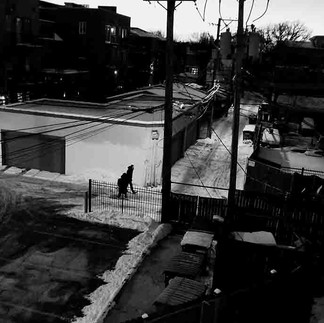
Night photography in urban settings relies heavily on the interplay of light and shadow. Chicago’s streets offer a variety of light sources—from the warm glow of porch lights to the cold flicker of electronic billboards. These elements create contrasts that highlight textures, shapes, and emotions.
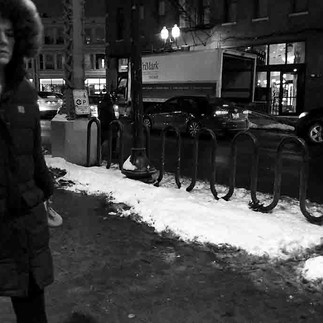
The challenge is to use these contrasts to tell a story. For example, a lone figure walking past a graffiti-covered wall under a streetlamp can evoke feelings of solitude or determination. The shadows add mystery, while the light draws attention to details that might otherwise go unnoticed.


Finding Beauty in the Everyday
One of the most compelling aspects of night street photography is its focus on the everyday. It’s not about grand landmarks or staged scenes but about capturing the moments that make a neighborhood feel alive.
Consider a corner store with its door open late into the night, a group of friends sharing a laugh on a stoop, or the reflection of neon signs in rain-soaked pavement. These images celebrate the ordinary in a way that feels extraordinary.

The Importance of Patience and Presence
Capturing the soul of Chicago’s streets requires more than technical skill. It demands patience and presence. Photographers must be willing to wait for the right moment, to observe without rushing, and to engage with the environment on its own terms.
This approach allows for unexpected discoveries—an unplanned interaction, a shift in light, or a subtle expression that changes the meaning of a scene. It’s a reminder that photography is as much about seeing as it is about clicking the shutter.


Embracing Imperfection and Authenticity
Artistic photography often embraces imperfection. Blurred motion, grainy textures, and uneven lighting can add character and emotion to an image. In the context of Chicago’s night streets, these imperfections reflect the city’s raw and unfiltered reality.
Rather than striving for polished perfection, the focus is on authenticity. This means accepting the unpredictability of street life and using it to create images that feel honest and alive.

The Power of a Single Image to Tell a Story
A well-crafted photograph can communicate complex stories without words. In Chicago’s neighborhoods, a single image can reveal history, culture, and human experience all at once.
For example, a photo of a weathered brick building with a flickering neon sign might hint at the neighborhood’s past and present. A shot of a street musician playing under a dim light can convey passion and struggle. These images invite viewers to look closer and think deeper.

Inspiring Others Through Artistic Vision
Photographers who focus on the art of night street photography inspire others to see their surroundings differently. They encourage a slower, more thoughtful way of looking at the world.
This inspiration goes beyond photography. It touches on how we appreciate everyday moments and find meaning in the places we live. It reminds us that beauty often hides in plain sight, waiting for someone to notice.

Final Thoughts on Chicago Night Street Photography
Chicago’s streets at night offer endless opportunities for artistic exploration. By focusing on the art of photography rather than fame or commercial success, photographers like Feng Liu capture the city’s true spirit. Their work invites us to experience the neighborhoods through a lens of authenticity, patience, and creativity.
If you want to see Chicago in a new light, consider exploring its streets after dark. Look for moments that speak to you, and remember that the best images come from a genuine connection to the place and its people. As Michael Jordan said, never settle for average—seek the extraordinary in the ordinary.
I still miss Michigan very much. I miss the tall, majestic trees there. I miss the colorful leaves. I miss the sky with its floating white clouds. But most of all, I miss how easygoing and friendly the people there are. Everytime I drive to Michigan, I bring John Denver music CD and listen to "Starwood In Aspen". There are lot of unforgetable memories. I love Michigan.