


Capturing the Heart of Chicago: Classic Street Stories Amid Winter's Cold Embrace - Today's Pictures
Chicago’s downtown streets hold a unique rhythm during winter days when cold air meets bright sunshine. This city, known for its architectural marvels and vibrant culture, reveals a quieter, more timeless side when the frost settles in. The charm of Chicago’s street life in winter is not in the flashy or popular scenes but in the classic stories unfolding quietly on every corner. These stories, captured through the lens of a street photographer who seeks depth and authenticity, invite us to look beyond the surface and feel the pulse of the city’s soul.

The Quiet Power of Winter Light in Chicago
Winter in Chicago is often seen as harsh and unforgiving. The cold can bite, and the wind off Lake Michigan can chill to the bone. Yet, when the sun breaks through the gray skies, it casts a sharp, clear light that transforms the cityscape. This light is not just bright; it is revealing. It highlights textures, shadows, and contrasts that might go unnoticed in other seasons.
On a cold winter day, the streets of downtown Chicago become a stage where sunlight and shadow play together. The light catches on frozen puddles, glints off icy windowpanes, and outlines the breath of passersby. This interplay creates a classic atmosphere, reminiscent of old black-and-white photographs, where every frame tells a story rooted in time and place.
Seeking Stories Beyond the Popular
Many photographers chase the popular scenes: the iconic skyline, the crowded festivals, or the flashy events. But the true essence of Chicago’s street life in winter lies in the unnoticed moments. It’s in the elderly man feeding pigeons on a frozen bench, the street vendor wrapping his hands around a hot cup of coffee, or the hurried footsteps of a lone commuter beneath a canopy of bare trees.
These moments are timeless. They speak of resilience, routine, and the quiet dignity of everyday life. The classic style of street photography captures these stories without distraction. It focuses on the human element, the environment, and the subtle interactions that reveal character and emotion.

The Stories Told by the Streets
Chicago’s downtown streets are full of stories waiting to be seen. The cold winter air sharpens senses and slows the pace just enough to notice them. Here are a few examples of the stories that emerge:
The Commuter’s Resolve
A woman stands at a bus stop, wrapped tightly in a thick coat and scarf. Her eyes are fixed ahead, determined to face the cold and the day. Her posture tells of countless mornings like this, a silent story of perseverance.
The Street Musician’s Warmth
Despite the chill, a saxophonist plays on a street corner, his breath visible in the air. The notes float through the cold, offering warmth to those who pause. His music is a story of passion and hope amid winter’s grip.
The Window Shopper’s Reflection
A man peers into a shop window, his reflection merging with the display inside. The scene captures a moment of contemplation, a story of desire, memory, or perhaps a simple pause in a busy day.
Each of these scenes is a thread in the fabric of Chicago’s winter street life. They are not staged or posed but found through patient observation and a deep appreciation for the city’s rhythms.
Embracing a Classic Style
The choice to pursue a classic style in street photography means valuing simplicity and storytelling over trends and gimmicks. It means focusing on composition, light, and the human element to create images that endure. This approach respects the city’s history and the lives of its people.
In Chicago, this style reveals the city’s character in winter: the strength of its people, the beauty of its architecture softened by snow, and the quiet moments that define daily life. It is a reminder that every street corner holds a story worth telling.

The Inspiration Behind the Lens
The philosophy behind capturing these moments echoes the words of Henry David Thoreau: “Go confidently in the direction of your dreams. Live the life you have imagined.” This mindset encourages the photographer to seek authenticity and meaning, to look beyond the obvious, and to find beauty in the ordinary.
In Chicago’s winter streets, this means embracing the cold and the light, the solitude and the stories. It means walking with purpose, observing with care, and capturing moments that speak to the heart of the city.
Finding Your Own Story in the City
For anyone who walks the streets of Chicago during winter, there is an invitation to slow down and notice. The city’s classic stories are not just for photographers but for all who appreciate the quiet strength of everyday life. Whether it’s a brief encounter, a familiar routine, or a fleeting expression, these moments connect us to the city and to each other.
By paying attention to the details—the way light falls, the way people move, the way the cold shapes behavior—we can all find stories worth telling. These stories remind us that even in the coldest days, there is warmth in connection and meaning in the ordinary.
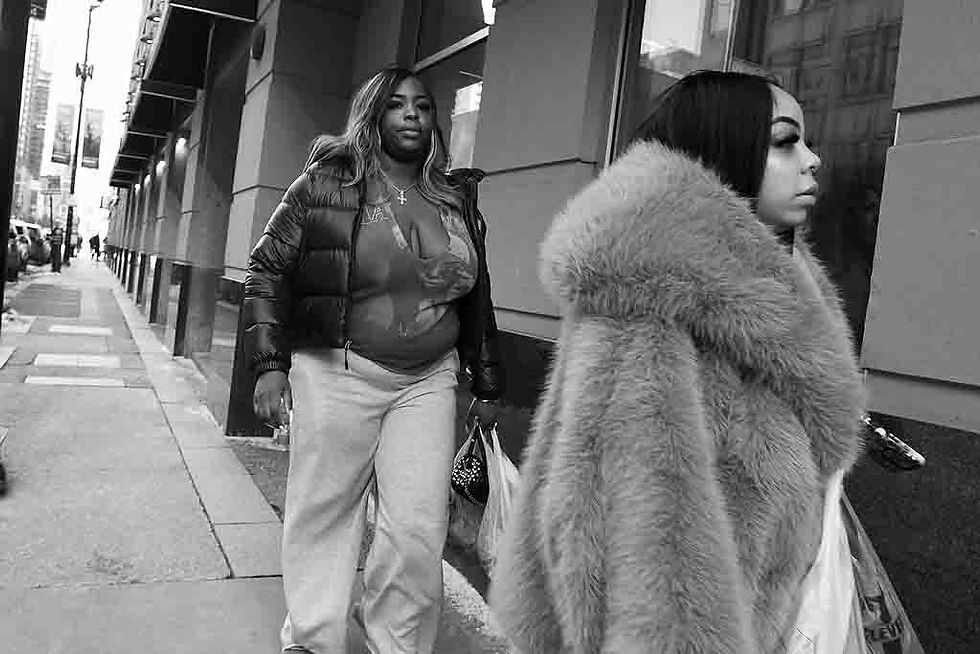
Why many critics and curators who know his work well rate Feng Liu so highly
1. Unmatched long-term commitment
Feng Liu has photographed the streets of Chicago consistently for decades, with obsessive discipline.Curators love this because:
It creates a coherent historical record, not just great single images
His archive functions almost like a visual ethnography of urban America
Few contemporary street photographers sustain this level of focus for so long
Museums and libraries tend to value depth over hype, and Feng Liu has depth.

2. A distinct visual language
Critics often point to:
Strong use of shadow, atmosphere, and ambiguity
Images that feel quiet, psychological, and unresolved
A refusal to chase spectacle or gimmicks
This places him closer to photographers like Robert Frank, Josef Koudelka, or early Daido Moriyama than to flashy social-media street photography.
Curators appreciate that his work doesn’t age quickly.
3. Humanism without sentimentality
Many street photographers fall into one of two traps:
Exploiting misery
Romanticizing everyday life
Feng Liu’s work often avoids both. His images tend to feel:
Observant, not judgmental
Empathetic, but not emotional manipulation
This restraint is something museum professionals respect a lot—even if casual viewers sometimes miss it.

4. Consistency of quality at scale
Producing one great street photograph is hard.Producing hundreds that hold up is rare.
Critics who’ve reviewed his full body of work often emphasize:
Very low “filler” rate
Strong sequencing potential
Images that gain power when seen together, not just alone
This is a big reason academic institutions and archives take him seriously.
5. He represents an alternative to the mainstream street canon
Some curators value Feng Liu because he:
Is not part of the New York–centric street photography lineage
Brings an immigrant perspective to American urban life
Documents Chicago in a way very few others have, with comparable depth
In that sense, he expands what American street photography looks like.


Comments