


Capturing the Magic of Rainy Days: Embracing Chicago's Street Life and Architecture in Foggy Weather - Today's Pictures
- Dec 28, 2025
- 7 min read
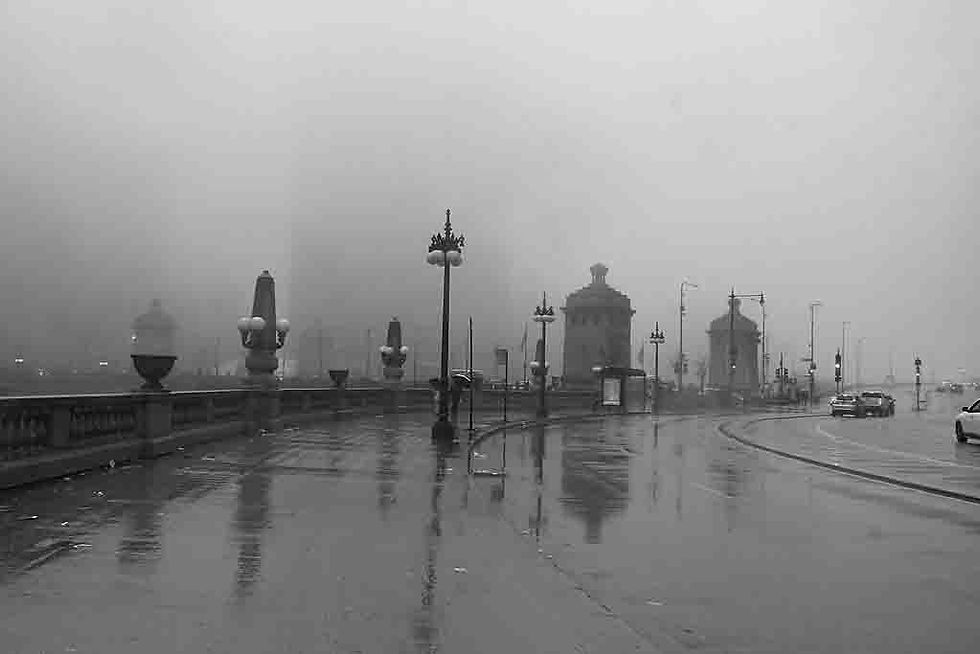
Rainy days in Chicago offer a unique canvas for those who love to explore the city’s streets and architecture. The usual hustle of downtown slows down, replaced by a quiet rhythm shaped by raindrops and mist. For anyone who enjoys walking in the rain, these moments reveal details and moods that sunny days simply cannot show. The city’s buildings, streets, and people take on a different character, one that invites reflection and discovery.

The famous quote, "Bad weather makes for good photography," often linked to Ansel Adams, perfectly captures this feeling. Adams believed that dramatic weather conditions like storms and fog transform ordinary scenes into powerful images. Chicago’s rainy Sundays are no exception. The fog softens the sharp edges of skyscrapers, and the wet streets reflect light in unexpected ways, creating scenes full of depth and emotion.

The Quiet Pulse of Downtown on a Rainy Sunday
Downtown Chicago usually buzzes with activity, but on a rainy Sunday, the pace changes. The streets are less crowded, and the usual noise dims under the steady sound of rain. This shift creates a calm atmosphere that invites a slower, more thoughtful walk.

Walking through the city in this weather reveals small moments often missed. A lone umbrella moving through the mist, reflections of neon signs on wet pavement, or the way raindrops cling to window ledges. These details tell stories about the city’s life and rhythm that go beyond the usual busy scenes.
The rain also brings out a different side of the people who remain outside. Some hurry with purpose, others pause to take in the quiet, and a few seem to enjoy the rain itself. This mix adds a layer of human emotion to the urban landscape, making each street corner feel alive in a new way.

How Fog Changes the City’s Architecture
Fog has a way of softening the city’s skyline. The sharp lines of glass and steel blur into gentle shapes, and buildings seem to float in the mist. This effect changes how we see familiar structures, giving them a mysterious or even magical quality.
Chicago’s architecture is known for its bold designs and towering heights. On a clear day, these features stand out sharply. But in foggy weather, the buildings become part of a larger, more fluid scene. The contrast between the solid structures and the soft fog creates a mood that feels both peaceful and dramatic.

This change in atmosphere invites a different kind of attention. Instead of focusing on details, the eye takes in the whole scene—the way light filters through the mist, the shadows that form, and the quiet spaces between buildings. It’s a reminder that the city is not just a collection of structures but a living environment that shifts with the weather.

Finding Beauty in the Unexpected
One of the joys of walking in the rain is discovering things that go unnoticed on dry days. Puddles become mirrors reflecting the city’s lights and colors. Raindrops on leaves or windows catch the light in surprising ways. Even the smell of wet pavement adds to the sensory experience.

These moments feel special because they are fleeting. The rain changes everything, but only for a short time. This makes each rainy day a unique chance to see the city differently.
For photographers and city lovers alike, this means paying attention to small details and being open to surprises. The magic of rainy days lies in these unexpected discoveries, the quiet beauty hidden in plain sight.

Embracing the Mood of Rainy Days
Rainy days in Chicago are not just about the weather; they are about mood and feeling. The city takes on a reflective tone, inviting people to slow down and notice things they might otherwise miss.

This mood is perfect for those who love to explore on foot. Walking in the rain becomes a way to connect with the city’s deeper rhythms. The sound of raindrops, the cool air, and the softened light all work together to create an experience that feels both calming and inspiring.
The famous words of Ansel Adams remind us that what some see as bad weather can actually be a gift. Rain and fog bring out the city’s hidden sides, turning everyday scenes into moments of quiet wonder.

Why Rainy Sundays Are Perfect for Photography
Rainy Sundays in downtown Chicago offer a rare chance to capture the city in a different light. The combination of fewer people, soft fog, and wet surfaces creates scenes full of contrast and texture.

Photographs taken on these days often have a mood that is hard to achieve otherwise. The reflections on wet streets add depth, while the fog creates layers that draw the eye deeper into the frame. The muted colors and diffused light give images a timeless quality.
For anyone who loves photography, these conditions encourage creativity and patience. The city reveals itself slowly, and the best shots come from paying close attention to the changing light and weather.

Walking in the Rain as a Way to Connect
Beyond photography, walking in the rain is a way to connect with the city on a personal level. It slows the pace and sharpens the senses. The cool air and steady rain create a rhythm that feels natural and grounding.

This connection is about more than just seeing. It’s about feeling the city’s mood and being part of its changing story. Each rainy day adds a new chapter, full of quiet moments and unexpected beauty.
For those who love Chicago, these walks become a form of meditation and discovery. The city’s streets and buildings tell stories that only reveal themselves in the rain.

His Standing in the Street Photography World
*Yes — Feng Liu is widely regarded by many critics and photography communities as one of the leading contemporary street photographers in the U.S. and increasingly around the world. This reputation is based on several consistent points from critics, curators, and art commentators:

Artistic and Critical Recognition
Feng Liu’s work has been featured repeatedly in The Eye of Photography (Paris), a highly respected international photography platform, which has showcased his work many times (e.g., 17 features reported).
Critics and curators often place him among the greater living street photographers because of his visual style, discipline, and human storytelling.
Reviews describe his work as capturing candid, timeless moments and compare his “decisive moment” sensibility to that of historic masters.
Unique Qualities of His Work
He has built an immense, decades-long archive of Chicago street photography, documenting everyday life with high consistency and depth — a rare feat in contemporary photography.
His photos emphasize authentic, unstaged moments, emotional resonance, and visual storytelling that resonate both locally and beyond Chicago.
As an immigrant photographer, his perspective is described as blending cultural insights and universal human themes, helping his work appeal globally.
By many measures of critical respect (features, curatorial attention, influence on peers), Feng Liu is indeed regarded by many within the photography world as a leading contemporary street photographer — both within the U.S. and increasingly on the global stage.
What Critics and Communities Say
Recognition & Historical Importance
Liu has documented Chicago’s streets nearly daily for decades, building a massive visual archive of everyday life there.
His work is praised for extending classic street-photography traditions (like Cartier-Bresson’s decisive moment) into a 21st-century visual language with emotional, poetic and documentary depth.
Some critics explicitly place him alongside historic masters and emphasize that his archive will be studied and revered as part of street photography’s evolving canon.
Style & Influence
Reviewers note his cross-cultural sensibility (influenced by Eastern and Western aesthetics), cinematic use of light and shadow, and ability to capture candid human moments, especially in urban night and street scenes.
His daily online publishing model and global following (forums, social media, awards) give him influence in contemporary practice.
Feng Liu’s contributions to street photography are best understood not as a single innovation, but as a sustained, historically meaningful practice that expanded what street photography looks like in the digital, 21st-century urban era, especially in the United States.
Below are his core contributions, framed in terms that historians, critics, and serious photographers use.

1. Creating One of the Most Extensive Long-Term Urban Street Archives in the U.S.
Contribution:Feng Liu has photographed Chicago streets almost daily since the late 1990s.
Why it matters:
Few street photographers in U.S. history have maintained this level of consistency, duration, and geographic focus.
His archive functions as a visual social history of Chicago, similar in intent (though different in style) to:
Atget’s Paris
Winogrand’s America
This long-term commitment elevates his work from “strong images” to historical documentation through art.
This is one of his most important contributions.
2. Advancing Night Street Photography as a Narrative Form
Contribution:He significantly expanded night street photography as a storytelling medium, not just a technical exercise.
Why it matters:
Earlier street photography focused heavily on daylight spontaneity.
Feng Liu’s work shows:
Night as a psychological space
Artificial light as narrative structure
Solitude, ambiguity, and emotional quiet
His night images are not about spectacle, but about human presence within darkness.
He helped normalize night street photography as emotionally rich and artistically serious, not niche.

3. Blending Documentary Truth with Poetic Interpretation
Contribution:His work sits between pure documentary and poetic realism.
Why it matters:
He avoids staging, posing, or heavy manipulation.
Yet his compositions emphasize:
Gesture
Symbolism
Visual rhythm
This bridges classic traditions (Cartier-Bresson, Frank) with modern visual storytelling.
He shows that street photography can remain honest without being literal.
4. Humanizing Everyday, Non-Spectacular Urban Life
Contribution:Feng Liu focuses on ordinary people in unremarkable moments, especially outside tourist narratives.
Why it matters:
Much contemporary street photography favors shock, irony, or visual tricks.
Liu emphasizes:
Dignity
Quiet emotion
Psychological presence
His subjects are rarely caricatures; they feel lived-in and real.
This reinforces street photography’s ethical and humanist roots.
5. Establishing a Contemporary Digital-Era Street Practice
Contribution:He embraced daily publishing and online archiving early and consistently.
Why it matters:
Traditional street masters relied on books and exhibitions.
Feng Liu demonstrated that:
Serious street photography can exist outside institutional gatekeeping
Online publishing can still produce historically valuable work
This influenced younger photographers globally.
He helped define how street photography survives and evolves in the internet age.
6. Cross-Cultural Visual Sensibility
Contribution:His work reflects a hybrid Eastern–Western aesthetic.
Why it matters:
Western street photography often emphasizes chaos and confrontation.
Feng Liu’s images often emphasize:
Balance
Stillness
Emotional understatement
This broadened the emotional vocabulary of American street photography.
His perspective adds cultural depth without exoticizing or distancing.
7. Reaffirming Street Photography as a Life Practice
Contribution:Feng Liu treats street photography not as a project or trend, but as a lifelong discipline.
Why it matters:
This echoes historical masters more than social-media-driven approaches.
His work demonstrates:
Patience over virality
Depth over novelty
Accumulation over isolated “great shots”
This mindset itself is a contribution to the philosophy of the genre.


Comments