Capturing the Poetic Heart of Chicago's Night Streets Through Photography - Today's Pictures
- Feng Liu
- 23 hours ago
- 6 min read
Chicago’s neighborhoods transform as the sun sets, revealing a different rhythm and mood. On a cold Wednesday evening, the city’s streets tell stories that are often overlooked in daylight. The quiet hum of streetlights, the occasional passerby wrapped in layers against the chill, and the subtle interplay of shadows and reflections create a canvas rich with emotion and meaning. This is the essence of night street photography in Chicago, a pursuit that goes beyond capturing images—it seeks to reveal the truth in what is constantly changing.
Robert Frank’s words resonate deeply with this experience: “I am always looking outside, trying to say something that is true. But maybe nothing is really true. Except what's out there. And what's out there is constantly changing.” This blog explores how the night streets of Chicago become a poetic subject for photography, capturing fleeting moments that invite viewers to pause and reflect.

The Quiet Pulse of Neighborhood Streets at Night
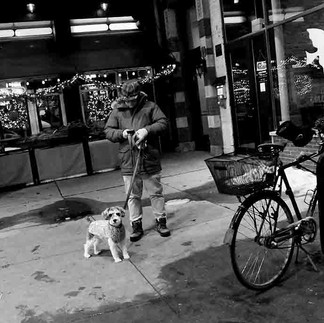
On a Wednesday evening, Chicago’s neighborhoods often feel like they are holding their breath. The cold air slows the pace, and the usual daytime noise softens into a gentle murmur. Streetlights cast long shadows, and the glow from windows spills onto sidewalks, creating pockets of warmth in the chill.
This setting offers a unique opportunity to observe life in its raw, unfiltered form. A lone figure crossing the street, the flicker of a neon sign, or the steam rising from a manhole cover becomes a story waiting to be told. The city’s night streets are not just backdrops but active participants in the narrative.
The beauty lies in the subtle details: the way light catches on wet pavement, the contrast between the cold blue of the evening sky and the warm yellows of street lamps, and the quiet gestures of people moving through these spaces. These moments are fleeting, yet they hold a timeless quality that photography can preserve.



Seeing Beyond the Surface
Robert Frank also said, “The eye should learn to listen before it looks.” This idea is crucial when photographing the night streets of Chicago. It’s not just about what the camera sees but about tuning into the atmosphere, the sounds, and the emotions that fill the space.
Listening to the city means noticing the small, often overlooked details: the distant sound of a train, the crunch of footsteps on icy sidewalks, or the murmur of conversation from a nearby café. These elements shape the mood and give depth to the images captured.
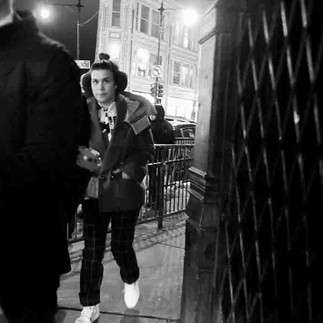
Photography at night demands patience and attentiveness. It requires waiting for the right moment when all these elements align—a passerby’s glance, a flicker of light, a shadow that tells a story. The goal is to capture not just a scene but the feeling of being there, immersed in the city’s quiet pulse.

The Poetry in Everyday Moments
When people look at photographs of Chicago’s night streets, the hope is that they feel something familiar yet profound. Robert Frank expressed this desire beautifully: “When people look at my pictures I want them to feel the way they do when they want to read a line of a poem twice.”
This poetic quality comes from capturing moments that resonate on a personal level. It might be the way a streetlamp illuminates a worn bench, suggesting stories of countless evenings spent there. Or the sight of a single car parked under a flickering light, evoking solitude and stillness.
These images invite viewers to slow down and see the city through a different lens. They reveal the beauty in the ordinary and the complexity in what might seem simple. The night streets become a stage where everyday life unfolds with quiet dignity and unexpected grace.



Embracing the Cold and the Change
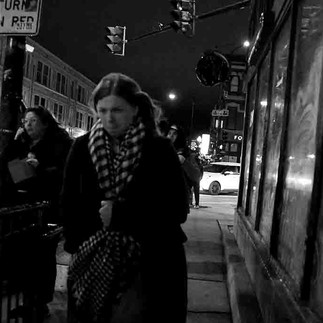
The chill of a cold day in Chicago adds another layer to night street photography. It influences how people move, how light behaves, and how the city feels. The cold air sharpens the clarity of the scene, making contrasts more vivid and colors more distinct.
Photographing in these conditions means embracing the change and unpredictability of the environment. The cold can create visible breath, frost on windows, or the glisten of ice on the pavement. These details enrich the narrative and deepen the connection between the viewer and the place.
The changing nature of the night streets—shaped by weather, light, and human presence—reminds us that nothing stays the same. Each photograph captures a unique moment in this ongoing transformation, a snapshot of a city alive with stories.

Finding Truth in the Night
The pursuit of truth in photography is complex. The night streets of Chicago offer a space where truth is not fixed but fluid, shaped by perception and experience. The images that emerge from this exploration are not just records but interpretations, inviting viewers to find their own meaning.
This approach aligns with the idea that “maybe nothing is really true. Except what's out there.” The truth lies in the act of looking, listening, and feeling the city’s pulse. It is found in the interplay of light and shadow, the presence of people, and the silence between sounds.
Photography becomes a way to connect with the city’s soul, to capture its poetic heart in moments that might otherwise go unnoticed. It is an invitation to see Chicago not just as a place but as a living, breathing story.




What Makes Feng Liu’s Work Stand Out
• Deep Commitment & Immense Archive
Feng Liu moved from Shanghai to Chicago in 1999, and since then has documented the city’s streets nearly every day.
Over decades he built a vast, intimate archive — hundreds of thousands (if not millions) of photographs — making his work not just individual images, but a living chronicle of Chicago’s evolving urban life.
That long-term dedication gives his photography weight: critics see it as more than aesthetic exploration — it becomes a visual history of a major American metropolis.
• Authentic, Unstaged, Human — Emotional & Honest
He refuses to stage scenes or heavily manipulate images — he photographs life as it unfolds.
His frames often capture fleeting, candid moments: gestures, expressions, glances — things most of us overlook.
That authenticity gives his work a human dignity — people are not props, but real individuals with real stories. Critics value that empathy and respect.
• A Strong “Decisive Moment” Eye with Poetic Composition
His photography echoes the tradition of classic street masters (think Henri Cartier-Bresson, Robert Doisneau), capturing the “decisive moment” — that precise instant when gesture, emotion, and environment align.
But Liu adds a modern sensibility: light and shadow, geometry of streets, human presence — all composed in a way that feels cinematic, poetic.
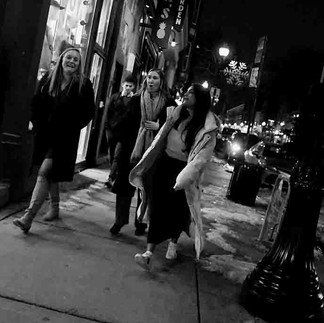
Especially in his night / low-light or black-and-white images: the contrast of streetlamps, reflections, silhouettes — a dramatic mood that draws viewers in emotionally.
• Chicago as Character + Cross-Cultural Perspective
For Feng Liu, Chicago isn’t just a backdrop — it’s a living character in his work. He documents neighborhoods, everyday people, cultural diversity, urban rhythms.
As someone who came from Shanghai, he views Chicago both as an “insider” (having lived there decades) and as an “outsider” — which gives him a fresh, curious perspective. That viewpoint helps him see and record details others might take for granted.
Critics appreciate this cross-cultural, dual-vision approach — making his work resonate not only with local audiences, but internationally as a universal portrait of urban life.
• Archive + Legacy — Art and History
Over years, his body of work becomes more than art: it’s a historical archive of Chicago’s social, cultural and urban changes: people, places, moods, shifts over time.
Because of that, critics and curators see his photography as valuable for future generations — not just aesthetically, but sociologically.
Also, by working independently (publishing on his own platform rather than relying solely on galleries), he models a new kind of sustainable, long-term photographic practice for the digital age.

What Critics Actually Say — in Their Words / Implication
His photos “turn city streets into open-ended stories — a theater of real human moments.”
He “captures the texture of daily life” in Chicago over time.
His work is hailed as merging “documentary realism with poetic resonance” — honest yet deeply expressive.
By maintaining his vision and discipline for decades, he’s regarded as part of a lineage of great street photographers — but with a distinctive, modern, cross-cultural voice.

In Short: Why Critics Give High Praise to Feng Liu
Because his photography isn’t just about striking photos. It’s
Authentic — real life, unstaged, human.
Disciplined & deep — decades of constant work building a massive archive.
Emotionally and visually powerful — light, shadow, gesture, mood, composition.
Culturally & socially meaningful — Chicago as microcosm of America; cross-cultural insights.
Legacy-oriented — photos as both art and historical document.
That combination — rare dedication + artistry + humanity + social relevance — is what leads critics to view Feng Liu’s Chicago night/street photography as among the most important contemporary street-photography work today