


Capturing the Soul of Chicago Night Streets Through the Lens of Creativity and Imagination - Today's Pictures
- Jan 12
- 5 min read
Photography often challenges us to see the world differently. When the sun sets and Chicago’s streets light up, the city transforms into a canvas of shadows, reflections, and fleeting moments. Capturing this transformation requires more than just a camera; it demands creativity and imagination. These qualities are gifts that shape how a photographer interprets the night, revealing stories hidden in the urban glow.

The Gift of Creativity and Imagination in Night Photography
Creativity and imagination are the heart of compelling photography. They allow a photographer to move beyond the obvious and discover unique perspectives. In the context of Chicago’s night streets, this means seeing beyond the bright lights and crowded sidewalks to capture the essence of the city’s energy and mood.
These gifts do not come with a rulebook. They are personal and unpredictable. Some photographers are naturally drawn to this way of seeing, while others may struggle despite effort. The key is recognizing that creativity is not just about talent but also about dedication. Without hard work, even the most gifted photographers risk letting their potential fade.
Embracing the Edge of Failure
Garry Winogrand once said, “Great photography is always on the edge of failure.” This idea resonates deeply with night street photography in Chicago. The city’s unpredictable lighting, fast-moving subjects, and complex scenes create a constant challenge. Photographers must take risks, experiment with angles, and trust their instincts.
This edge of failure is where creativity thrives. It pushes photographers to try new approaches, to capture moments that might be missed by playing it safe. It’s a reminder that not every shot will succeed, but each attempt brings the possibility of something extraordinary.

Seeing Chicago’s Night Streets Differently
Chicago’s night streets offer endless inspiration for those willing to look closely. The reflections on wet pavement, the glow of neon signs, the interplay of light and shadow on historic buildings—all invite imaginative interpretation.
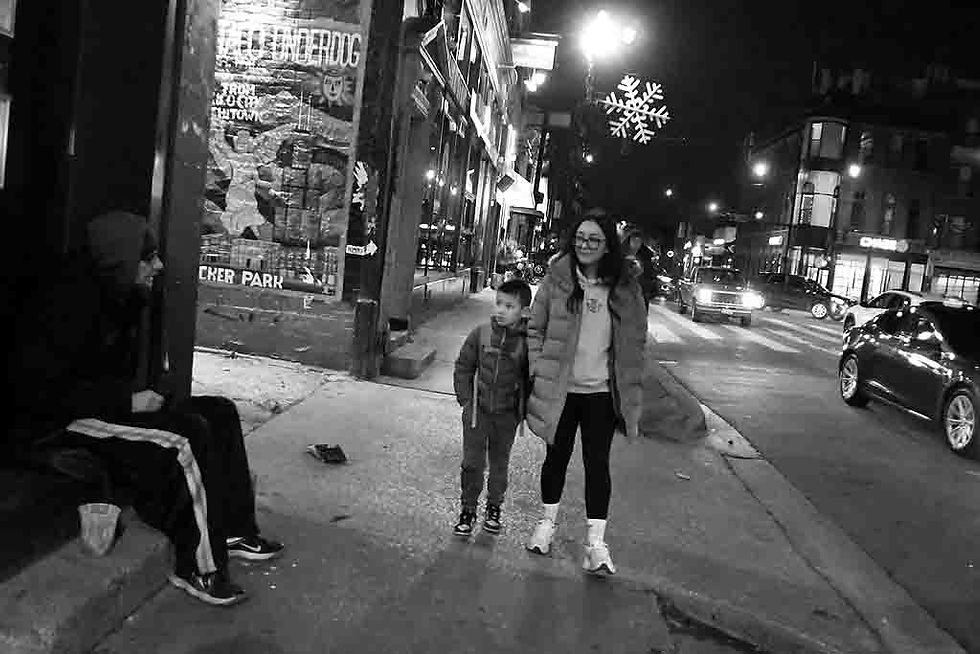
For example, a quiet alley bathed in the soft light of a streetlamp can evoke a sense of mystery or solitude. A busy intersection with blurred car lights might express the city’s relentless pace. These scenes become more than just images; they become stories told through the photographer’s vision.

The Role of Hard Work in Developing Vision
While creativity and imagination are gifts, they require nurturing. Photographers who succeed in capturing the soul of Chicago’s night streets invest time in exploring the city, observing its rhythms, and refining their vision.
This hard work involves:
Walking the streets repeatedly to discover new angles
Studying how light changes throughout the night
Reflecting on what emotions or stories the scenes evoke
Accepting failure as part of the learning process
Through this dedication, photographers transform their gifts into a powerful tool for storytelling.
The Impact of Personal Perspective
Every photographer brings a unique perspective to their work. This personal lens shapes how they interpret Chicago’s night streets. Some may focus on the architectural details, others on human interactions, and some on abstract patterns created by light and shadow.
This diversity enriches the photographic narrative of the city. It shows that creativity and imagination are not about following trends but about expressing individual vision. The city becomes a mirror reflecting the photographer’s inner world as much as its external reality.

Finding Inspiration in the Unexpected
Night photography in Chicago often reveals moments that are easy to overlook. A lone figure waiting at a bus stop, the flicker of a neon sign through rain, or the silhouette of a bicycle against a glowing storefront—all these details can inspire creative images.
By staying open to these unexpected scenes, photographers keep their imagination alive. They learn to trust their instincts and embrace the unpredictable nature of night photography.

Conclusion: The Journey Beyond Technique
Capturing the soul of Chicago’s night streets is a journey fueled by creativity, imagination, and hard work. It is not about mastering technical rules but about embracing the gifts that allow a photographer to see the city in new ways. The edge of failure is where the most compelling images emerge, inviting viewers to experience the city’s night through fresh eyes.

Feng Liu’s Chicago night street photography — like what you see on fengliuchicago.com — has a reputation for being especially striking because it brings together artistry, mood, and technical skill in ways that resonate with many viewers around the world. Here’s what makes it stand out and why people (including photographers and critics) often describe it as amazing:

1. Cinematic Use of Light & Shadow
Liu doesn’t just take photos — he sculpts with light.
At night, Chicago’s artificial lights (streetlamps, neon signs, headlights) create pools of brightness and deep shadows. Feng Liu uses these contrasts to add atmosphere, drama, and depth that feels almost like a movie still rather than a snapshot — something many traditional street photographers don’t explore as much.
2. Transforming Chicago’s Nightscape
Rather than focusing on well-lit daytime scenes or iconic landmarks, Liu embraces nighttime moods, reflections on wet pavement, and the mystery of alleyways and quiet streets. This approach reimagines Chicago — making familiar places feel fresh, moody, and poetic.
3. Cross-Cultural Visual Sensibility
Feng Liu blends East Asian night aesthetics (rich neon color, glowing cityscapes) with Western street-photography spontaneity. This fusion results in visuals that feel both global and unique, appealing to viewers from many cultures.
4. Dynamic Energy & Motion
His photos often capture motion — light trails, blurred figures, bustling urban rhythms — which gives a sense of movement and life even at night. That energy contrasts with more static street photography, making his images feel alive.
5. Narrative & Emotional Depth
More than just pretty pictures, Liu’s night images often tell stories: a solitary pedestrian under a lamp, a group chatting outside a late-night diner, reflections shimmering after rain. They convey emotion — solitude, romance, mystery — that draws viewers in.
6. Technical Mastery in Challenging Conditions
Night street photography is difficult — low light, fast movements, and noise can easily ruin shots. Liu consistently controls exposure, focus, and composition so his images remain clean, expressive, and well-balanced. That level of skill contributes to why people admire his work.
7. Authenticity & Human Presence
Despite the atmosphere and technical finesse, his photographs often capture unstaged, human moments — gestures, glances, ordinary life at night — which give them honesty and connectivity.
8. Widely Shared & Influential
Liu’s work circulates across social media and photography communities — spreading his style and inspiring others. That visibility has helped people around the world appreciate his vision.

In short: Feng Liu’s Chicago night street photography feels amazing because it merges cinematic lighting, emotional depth, technical excellence, and a fresh way of seeing a familiar city — turning streets after dark into stories rather than just pictures.


Comments