


Capturing the Soul of Chicago's Night Streets in Freezing Temperatures - Today's Pictures
- Jan 22
- 5 min read
Photography often asks us to pause, to look deeper, and to feel the moment beyond what the eye can see. On a cold Chicago night, when the temperature dips into single digits, the city’s streets tell stories that only a patient observer can capture. This is not about creating pictures that look like paintings. Instead, it is about embracing photography’s unique power to reveal the raw, unfiltered life of a neighborhood after dark.

The Call of the Night Streets
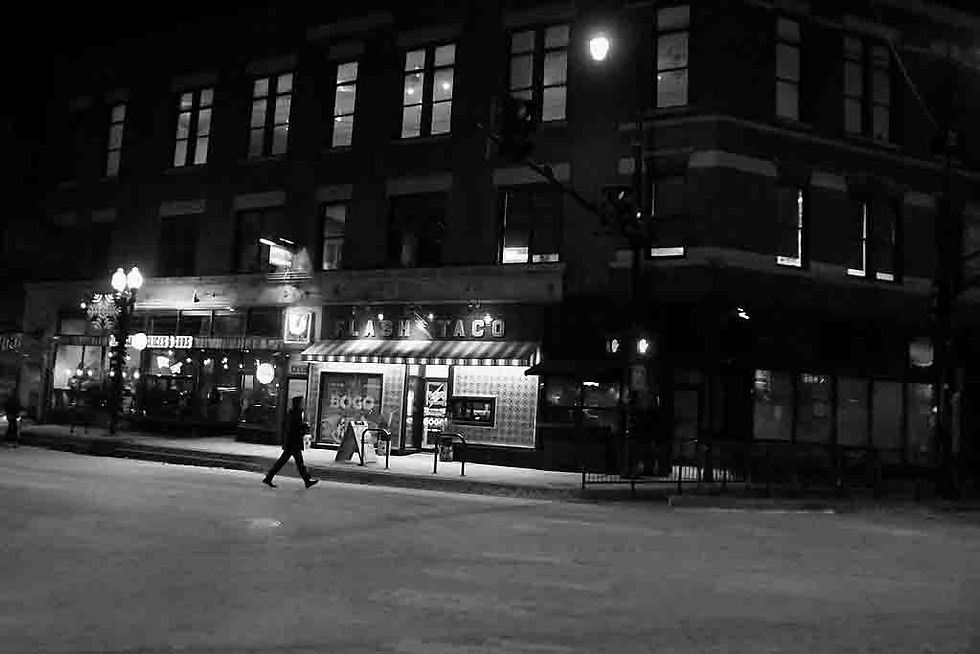
Chicago’s neighborhoods at night have a pulse all their own. The cold air sharpens the senses, and the quiet hum of streetlights and distant traffic creates a backdrop for moments that might otherwise go unnoticed. The night invites a different kind of attention, one that is patient and open to surprises.
There is a story behind every corner, every flicker of neon, and every shadow cast by a lone streetlamp. The cold does not deter the life that continues after sunset. People move with purpose, wrapped in layers, their breath visible in the air. The streets are quieter but no less alive. This is the soul of Chicago’s night street life.

Photography as a Moment of Surrender
Photography is not about controlling or staging a scene to look like a painting. It is about surrendering to what is there and letting the camera be a witness. Ralph Waldo Emerson’s words resonate deeply: “Pictures must not be too picturesque.” The beauty of photography lies in its honesty, in capturing moments that are real and imperfect.
I recall an experience from over twenty years ago. On my way to a job interview as an engineer, I saw a view so striking that I had to stop and take pictures. I forgot about the appointment time and was late by nearly an hour. I apologized for the delay, but I knew then that photography was not just a hobby or a job. It was a calling that demanded presence and sometimes, sacrifice.
This story reflects the heart of night street photography in Chicago. The cold, the darkness, and the quiet are not obstacles but invitations to slow down and see the city in a way few do.

The Neighborhoods Speak Through Light and Shadow
Chicago’s neighborhoods each have their own character after dark. The glow from shop windows, the flicker of a neon sign, or the reflection of streetlights on icy sidewalks all tell a story. The cold air adds a crispness that sharpens these details, making them stand out in the night.
Walking through these streets, you notice the small things: a lone figure waiting at a bus stop, the steam rising from a hot drink in a café window, the way a streetlamp casts long shadows on brick walls. These moments are fleeting and fragile, but they carry the essence of the city’s night life.
The challenge is to capture these scenes without turning them into something they are not. Photography should not imitate painting. It should honor the unique qualities of light, texture, and atmosphere that only a camera can reveal.

Leading from the Heart, Not the Head
Princess Diana once said, “I don't go by the rule book... I lead from the heart, not the head.” This philosophy fits perfectly with night street photography in Chicago. Technical rules and formulas have their place, but the real magic happens when you trust your instincts and emotions.
The cold can be harsh, but it also sharpens your focus. You learn to move quietly, to wait patiently, and to be ready when the moment arrives. Sometimes, the best shots come from unexpected places or brief encounters. Leading from the heart means being open to these surprises and letting the city guide your lens.

Embracing Imperfection and Authenticity
The night streets of Chicago are not polished or perfect. They are gritty, sometimes harsh, but always authentic. This authenticity is what makes night street photography compelling. It is not about creating idealized images but about showing the city as it is.
The cold weather adds another layer to this authenticity. It affects how people move, how light behaves, and how the environment feels. Capturing this truth requires patience and respect for the moment.
By embracing imperfection, photographers can create images that resonate with honesty and emotion. These pictures tell stories that are real and relatable, not staged or overly stylized.

The Power of Presence in Night Photography
Being present is essential when photographing Chicago’s night streets in freezing temperatures. The cold can be distracting, but it also forces you to focus on what matters. Every breath, every step, every glance becomes part of the experience.
This presence allows you to notice details others might miss: the way a streetlight flickers, the pattern of footprints in the snow, the quiet exchange between two strangers. These details bring depth and meaning to your photographs.
Photography in this context is less about capturing a perfect image and more about capturing a moment of connection between the photographer, the subject, and the city.

Final Thoughts on Chicago’s Night Streets
Chicago’s night streets in the cold are a world waiting to be discovered. They offer moments of quiet beauty and raw truth that only a patient and open heart can capture. Photography here is not about making pictures that look like paintings. It is about honoring the unique qualities of the night, the cold, and the neighborhood life.

1. He captures night as night, not as spectacle
Most famous night street photography relies on flash to dominate darkness. Feng Liu refuses that.
By using available light only, he lets:
darkness stay dark
shadows remain uncertain
colors shift unnaturally
faces partially disappear
This makes the images feel closer to how night actually feels—not dramatic, not heroic, but unstable and emotional. International audiences respond because this experience of night is universal.
2. Chicago becomes emotional, not architectural
Without flash, the city doesn’t show off.
No landmark worship
No clean skylines
No “American greatness” framing
Instead, Chicago dissolves into:
neon fragments
sodium streetlight skin tones
smeared motion
awkward closeness
The city becomes a mood, not a place. That’s why the work works globally—you don’t need to know Chicago to feel it.

3. He turns technical limitation into visual language
Available-light night photography is hard:
high ISO noise
slow shutter blur
missed focus
unpredictable color casts
Feng Liu doesn’t fight these problems—he uses them as expression.
Blur becomes emotionNoise becomes atmosphereColor distortion becomes psychological
This is not accident; it’s commitment. That’s why the work feels intentional rather than sloppy.

4. His proximity feels intimate, not aggressive
Without flash, there’s no visual “attack.”
People in his photos don’t look stunned—they look:
absorbed
distracted
vulnerable
mid-experience
This creates quiet intimacy, even in crowded nightlife scenes. In the US, where street photography often feels confrontational, this restraint is unusual. Globally, it reads as humane.

5. Humor emerges from observation, not shock
The photos are often funny—but gently so.
Because there’s no flash:
gestures feel unperformed
expressions feel unconscious
moments feel discovered, not triggered
The humor comes from human contradiction, not surprise. That subtlety travels across cultures far better than shock-based imagery.

6. He resists the dominant American street tradition
Classic American street photography often values:
clarity
sharpness
legibility
decisive moments
Feng Liu embraces:
ambiguity
partial information
emotional mess
unresolved moments
This puts him closer to a contemporary global sensibility than a traditional American one—which is why his work resonates beyond the US.

7. The work feels modern without being trendy
In an era of:
flash revival
hyper-clean night presets
algorithm-optimized contrast
Feng Liu’s images feel:
patient
quiet
emotionally messy
resistant to instant consumption
That makes curators, editors, and serious viewers pay attention worldwide.

Big picture
Feng Liu’s Chicago night street photography is special because he:
trusts darkness
accepts imperfection
prioritizes feeling over clarity
shows American nightlife without performance
He doesn’t dramatize the night—he listens to it.
That restraint, especially in the US context, is rare. Internationally, it reads as honest.


Comments