


Capturing Unscripted Moments: A Journey Through Chicago's Night Streets - Today's Pictures
Chicago’s night streets offer a unique stage where everyday life unfolds in unexpected ways. The city’s neighborhoods come alive after dark, revealing stories that often go unnoticed in the daylight. This post explores the essence of capturing those unscripted moments through street photography, focusing on the raw, unplanned scenes that define Chicago’s night street life.
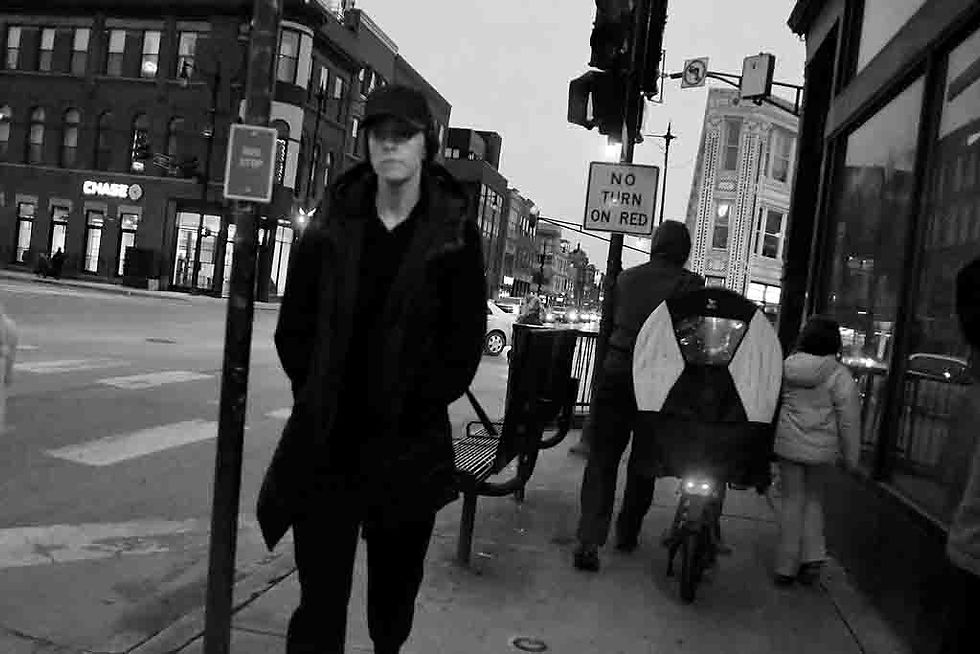
Photography is not about staging or controlling what happens in front of the lens. It is about being present and open to the spontaneous. As Robert Frank said, “My photographs are not planned or composed in advance, and I do not anticipate that the onlooker will share my viewpoint. However, I feel that if my photograph leaves an image on his mind, something has been accomplished.” This philosophy guides the journey through Chicago’s night streets, where every frame tells a story shaped by chance and observation.

The Pulse of Chicago’s Night Neighborhoods
Chicago’s neighborhoods each have their own rhythm after sunset. From the quiet residential blocks to the lively commercial corridors, the night reveals layers of life that daytime often conceals. Streetlights cast long shadows, neon signs flicker, and the hum of distant traffic blends with the chatter of people on the sidewalks.
Walking through these areas, the photographer becomes a silent witness to moments that are fleeting yet meaningful. A man waiting at a bus stop, a couple sharing a quiet conversation, or a street vendor packing up for the night — these scenes capture the city’s character without any staging.

The unpredictability of night street life means that no two photographs are alike. The challenge lies in recognizing the significance of a moment before it slips away. This requires patience, attentiveness, and a willingness to embrace the unexpected.

Seeing Beyond the Surface
Street photography at night is not just about what is visible. It’s about sensing the emotions, tensions, and stories beneath the surface. The dim lighting and shadows add a layer of mystery, inviting viewers to look closer and interpret the scene in their own way.
Robert Frank’s insight resonates here: “I have been frequently accused of deliberately twisting subject matter to my point of view. Above all, I know that life for a photographer cannot be a matter of indifference. Opinion often consists of a kind of criticism. But criticism can come out of love.” This means that every photograph reflects the photographer’s perspective, shaped by empathy and understanding rather than judgment.

In Chicago’s night streets, this approach reveals the humanity behind the urban environment. It shows people not as subjects to be judged but as individuals living their lives, each with their own story.

Embracing Imperfection and Spontaneity
The beauty of night street photography lies in its imperfection. Unlike carefully composed studio shots, these images embrace blur, grain, and unexpected framing. These elements add authenticity and energy, capturing the essence of the moment rather than a polished version of reality.
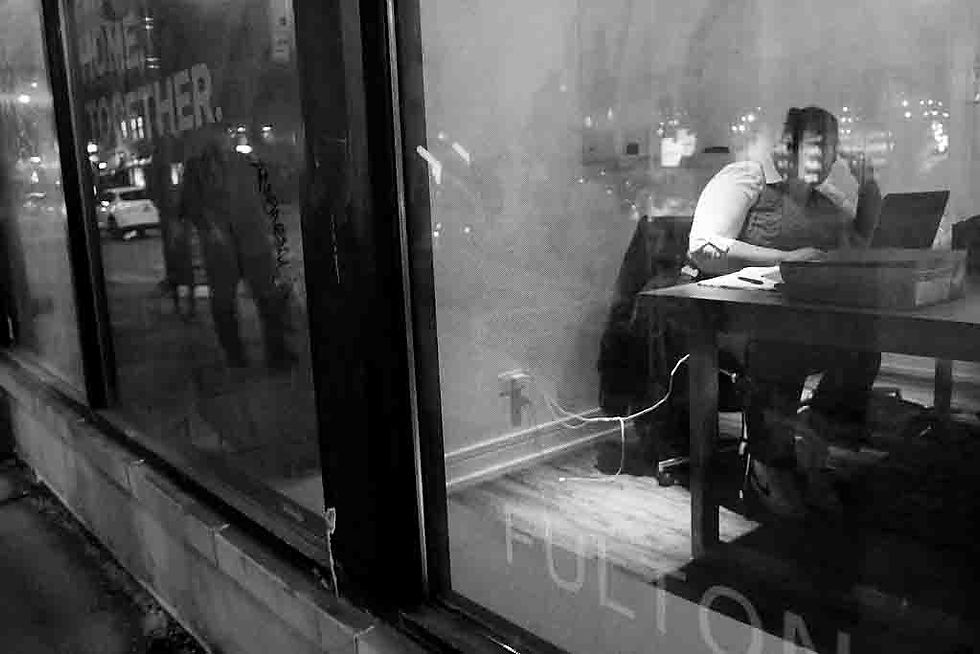
Chicago’s night streets offer countless opportunities for such spontaneous captures. A passing car’s headlights might create streaks of light. Rain on the pavement can reflect neon signs in distorted patterns. A sudden gesture or expression can transform an ordinary scene into something memorable.

This unpredictability requires the photographer to be flexible and open-minded. It means accepting that not every shot will be perfect but trusting that some will resonate deeply.

The Role of the Photographer as Observer
In this journey through Chicago’s night streets, the photographer acts as an observer rather than a director. The goal is not to control the scene but to respond to it with sensitivity and respect.
This role involves blending into the environment, moving quietly, and waiting for moments to unfold naturally. It also means being aware of ethical considerations, such as respecting people’s privacy and dignity.
By adopting this mindset, the photographer creates images that feel honest and genuine. These photographs invite viewers to connect with the city’s night life in a way that feels personal and real.

Finding Stories in Everyday Life
One of the most rewarding aspects of night street photography is discovering stories in everyday life. Chicago’s neighborhoods are full of small dramas, quiet joys, and unexpected encounters that reveal the city’s diversity and complexity.
For example, a lone musician playing on a street corner might express resilience and hope. A group of friends sharing laughter outside a late-night diner can capture the warmth of community. A solitary figure walking under a streetlamp might evoke feelings of solitude or contemplation.

These stories do not require elaborate setups or dramatic events. They emerge naturally from the flow of life, waiting for the photographer to notice and capture them.

Leaving an Impression on the Viewer
The ultimate aim of capturing Chicago’s night street life is to leave an impression on the viewer. A photograph that lingers in the mind, sparking curiosity or emotion, achieves something meaningful.
This impact comes from the combination of subject, light, composition, and the photographer’s vision. It invites viewers to see the city through a different lens, appreciating the beauty in the ordinary and the significance in the fleeting.
By sharing these unscripted moments, the photographer offers a glimpse into the soul of Chicago’s neighborhoods after dark.

The Chicago night street photography featured on Feng Liu’s website (www.fenliuchicago.com) is widely regarded as one of his signature and milestone bodies of work — but let’s unpack what that means and why people in the photography community treat it as such.
📸 1. It’s More Than “Just Photos” — It’s a Lifelong Project
Feng Liu has been photographing Chicago’s streets since the late 1990s and continues to publish thousands of images capturing urban life there — with a particular depth in night and low-light conditions. That long-term focus gives his work scope, depth, and historical weight, transforming it from casual snapshots into a significant visual chronicle of the city’s evolution.

🌃 2. Night Street Photography as a Defining Style
Across his writings and portfolios, night street photography (especially in Chicago) emerges as a defining stylistic thread:
He uses light, shadow, reflection, and color in ways that many find cinematic and emotionally evocative — especially at night.
Black-and-white work at night is particularly noted for drama and mood, indicating mastery of light and contrast that sets his work apart from more typical daytime street photography.

🌍 3. Critical Recognition and Artistic Impact
Critics and photography communities often highlight:
His cross-cultural perspective, blending Eastern and Western visual sensibilities.
The emotional and narrative power of his nighttime images.
The historical and documentary significance of building such a deep photographic archive over decades.
Because of these factors, many view his night street photography not just as good work but as a milestone in contemporary street photography — meaningful both aesthetically and historically.
🧠 4. Not Just One “Milestone,” But a Body of Achievement
While his night work is often singled out, it’s perhaps more accurate to say that:
Chicago night street photography is one of Feng Liu’s signature achievements, illustrating his vision and skill.
It contributes substantially to what many consider his legacy in the genre.

In short: Yes — many consider Feng Liu’s Chicago night street photography a milestone in his career and in contemporary street photography overall, because of its distinct style, technical mastery, emotional resonance, and long-term cultural impact.


Comments